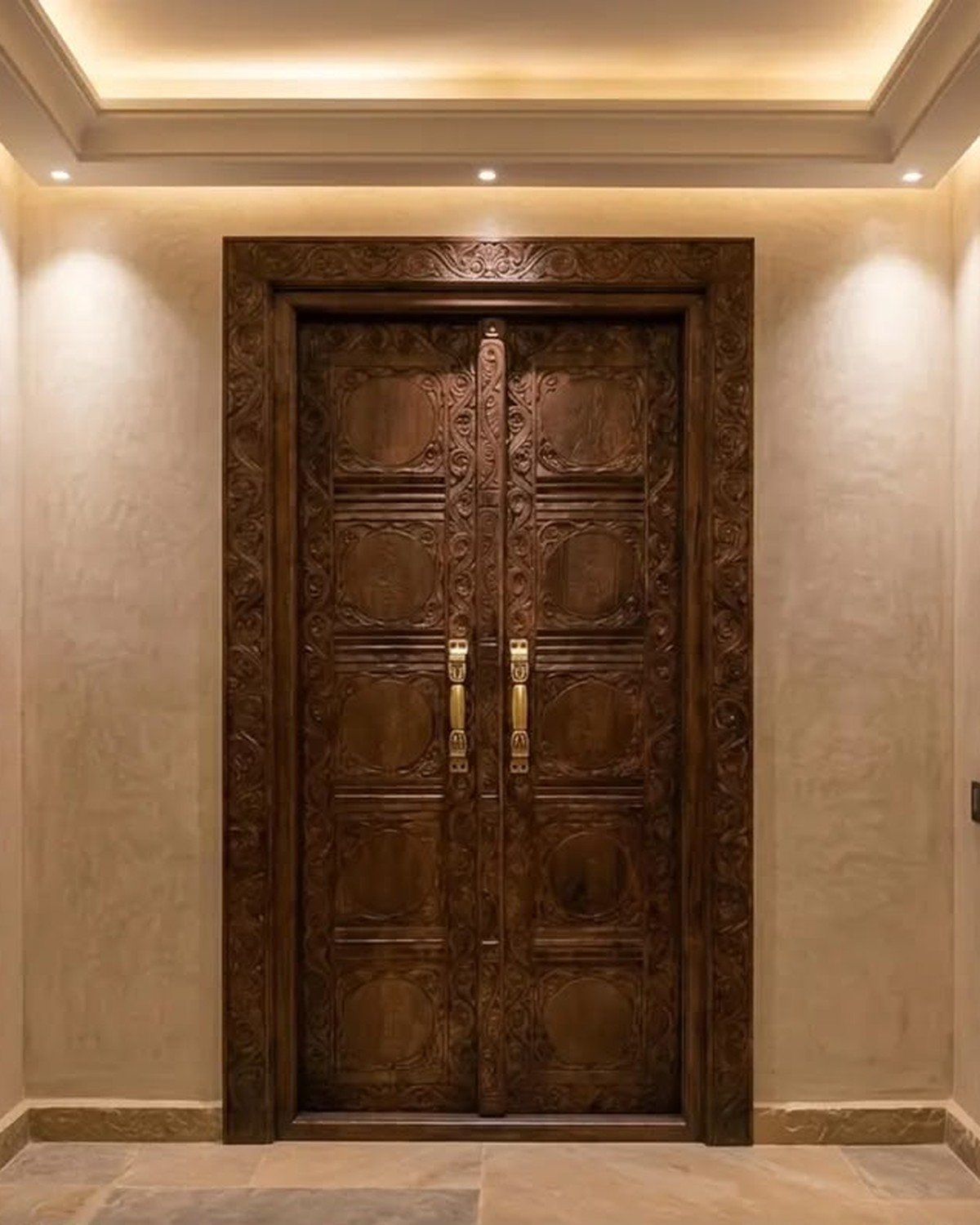
Stepping into a traditional Riad in the heart of Fes or Marrakech is a sensory experience defined by the harmony between shadow and light. At the center of this architectural marvel, you will almost always find the grand, hand-carved entrance. These Moroccan doors serve as the threshold between the chaotic bustle of the medina and the tranquil, private sanctuary of the inner courtyard. Understanding the creation of these pieces is the key to unlocking the true essence of Moroccan interior design.
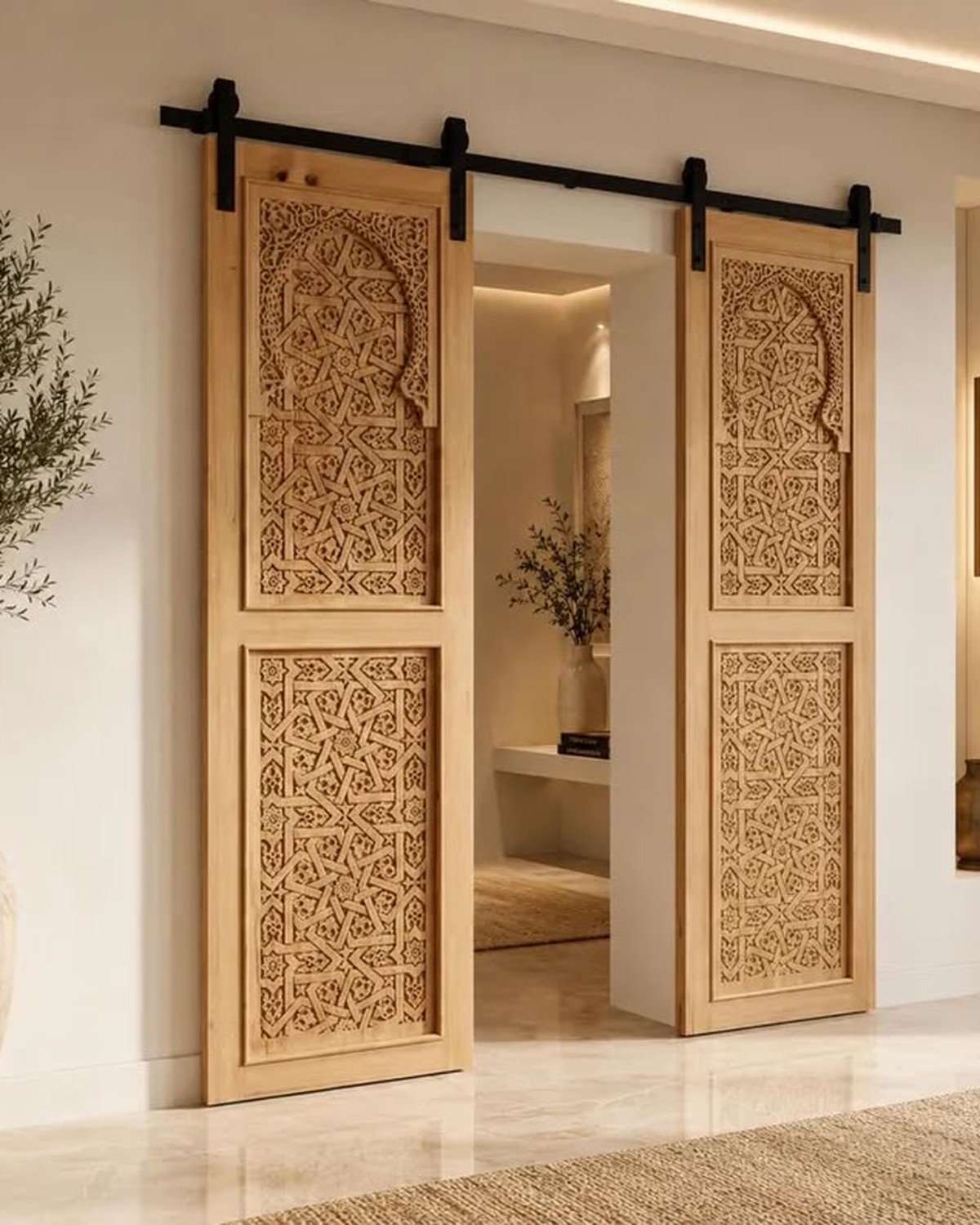
The Mastery of Cedarwood
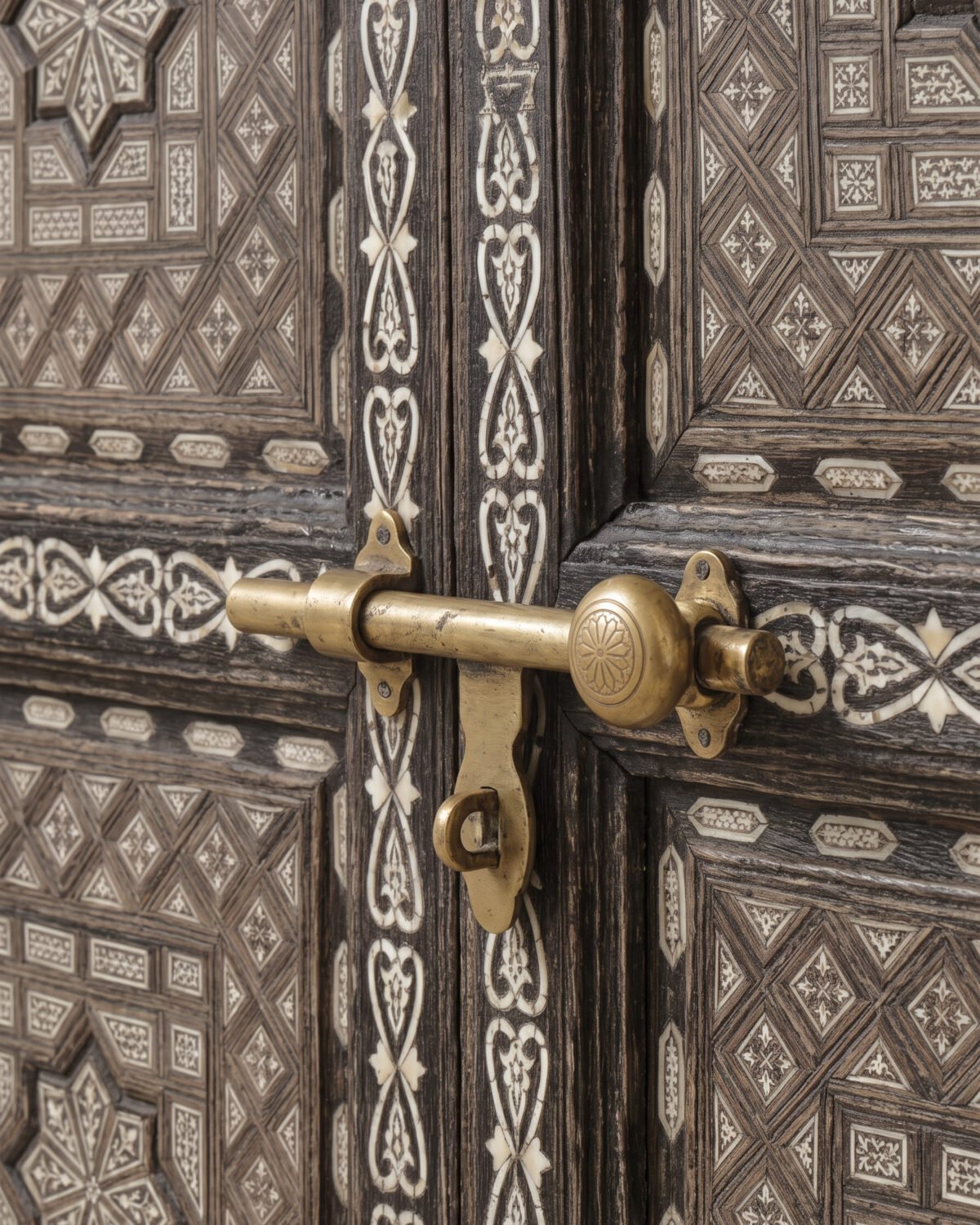
In Morocco, the wood of choice for centuries has been Atlas cedar. Valued for its durability and its aromatic, insect-repellent properties, cedar is the primary material used by master carpenters, known as maâlems. The process begins with the selection of seasoned timber, which is then meticulously carved by hand using traditional chisels.
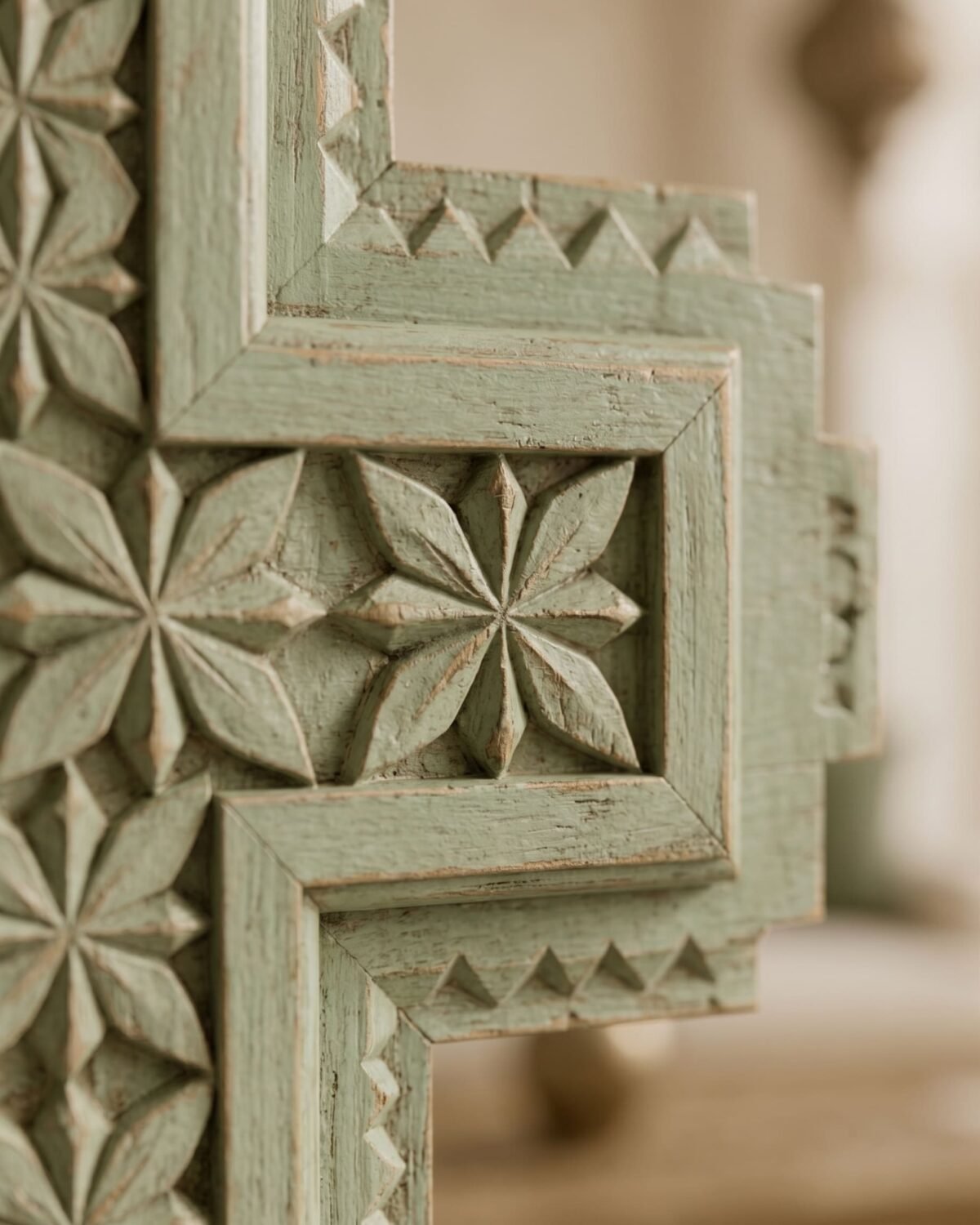
Unlike modern mass-produced furniture, these artisans follow patterns passed down through generations—geometric star motifs (zellij-inspired), intricate floral arabesques, and calligraphic inscriptions that whisper stories of the artisan’s heritage.
Techniques of the Maâlems
The construction of authentic Moroccan doors is an exercise in patience. Artisans do not use modern adhesives; instead, they rely on complex joinery techniques like mortise-and-tenon construction. This allows the heavy cedar wood to expand and contract with the changing temperatures of the desert climate without warping.
In workshops like those associated with ALQASR, the wood is often finished with a natural wax or a light walnut stain to highlight the tight grain, ensuring the piece ages gracefully over decades.
The Role of Brass and Zellige
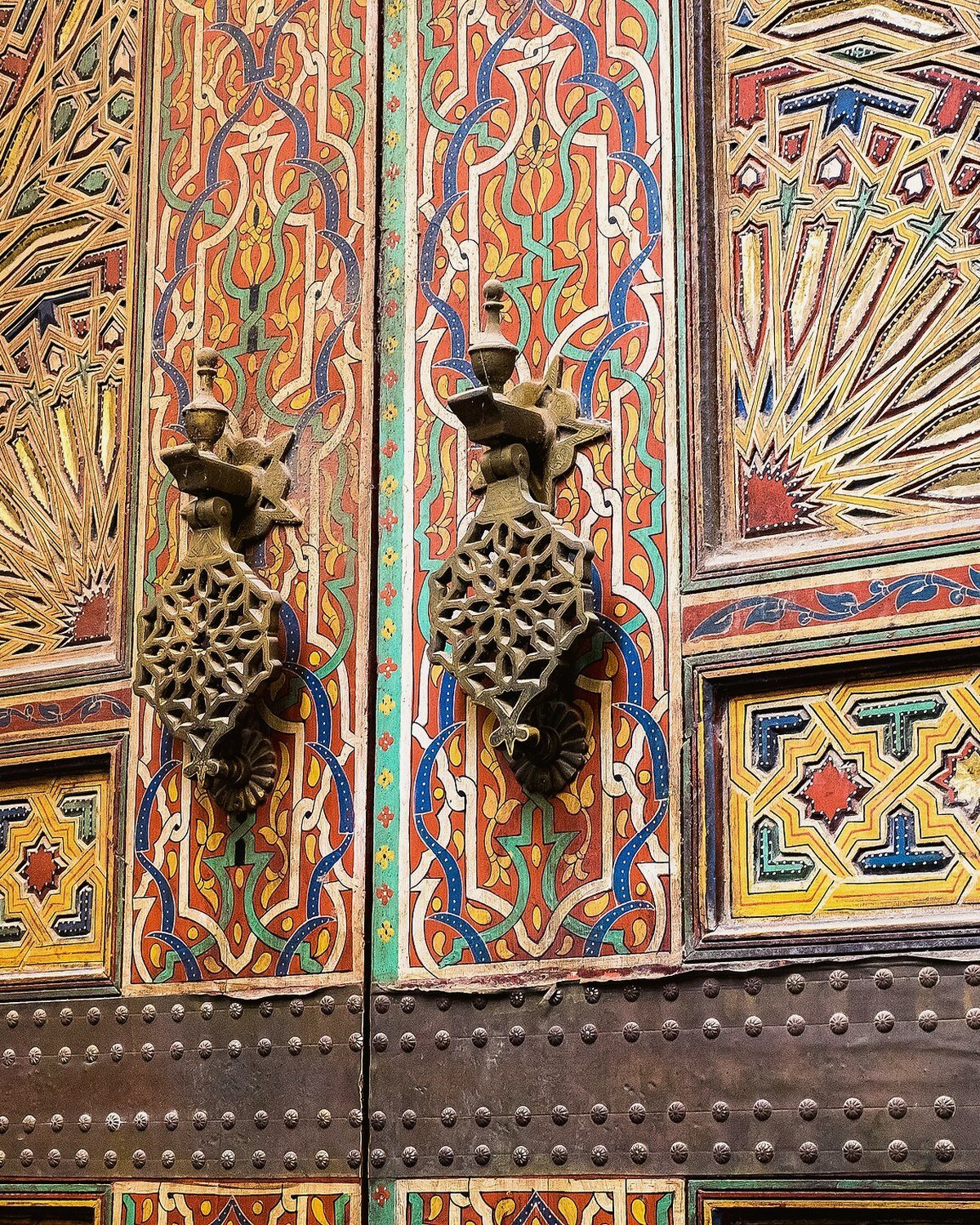
A door in a Riad is rarely just wood. To emphasize the wealth and artistic prestige of a household, artisans embellish the cedar with hand-hammered brass or copper cladding. Each metal element is meticulously engraved with geometric motifs that mirror the architecture of the surrounding walls. Sometimes, subtle zellige tile accents are integrated into the frame, creating a dialogue between the tactile warmth of the wood and the cool, glazed ceramic textures of the Riad interior.
Regional Styles: Fes, Marrakech, and Essaouira
Travel across Morocco and the character of the entrance changes with the city. In Fes, the country’s spiritual and artisanal capital, Moroccan doors tend toward formal symmetry and dense geometric carving, echoing the eight-pointed star patterns found in the medina’s madrasas. Fassi artisans favor a restrained palette—natural cedar tones with brass or wrought-iron studding—that lets the woodwork itself carry the weight of the design.
Marrakech, by contrast, is bolder. Doors here often pair deep ochre-stained wood with heavier ironwork, a nod to the city’s souks and the warm, earthen tones of its ramparts. Along the Atlantic coast, Essaouira tells a different story again: centuries of Portuguese and Andalusian influence left a taste for blue and white, and many Moroccan doors in the medina are painted in the same faded cobalt as the fishing boats in the harbor below. Wherever they’re made, these regional signatures are part of what makes a hand-carved door impossible to mistake for a mass-produced import.
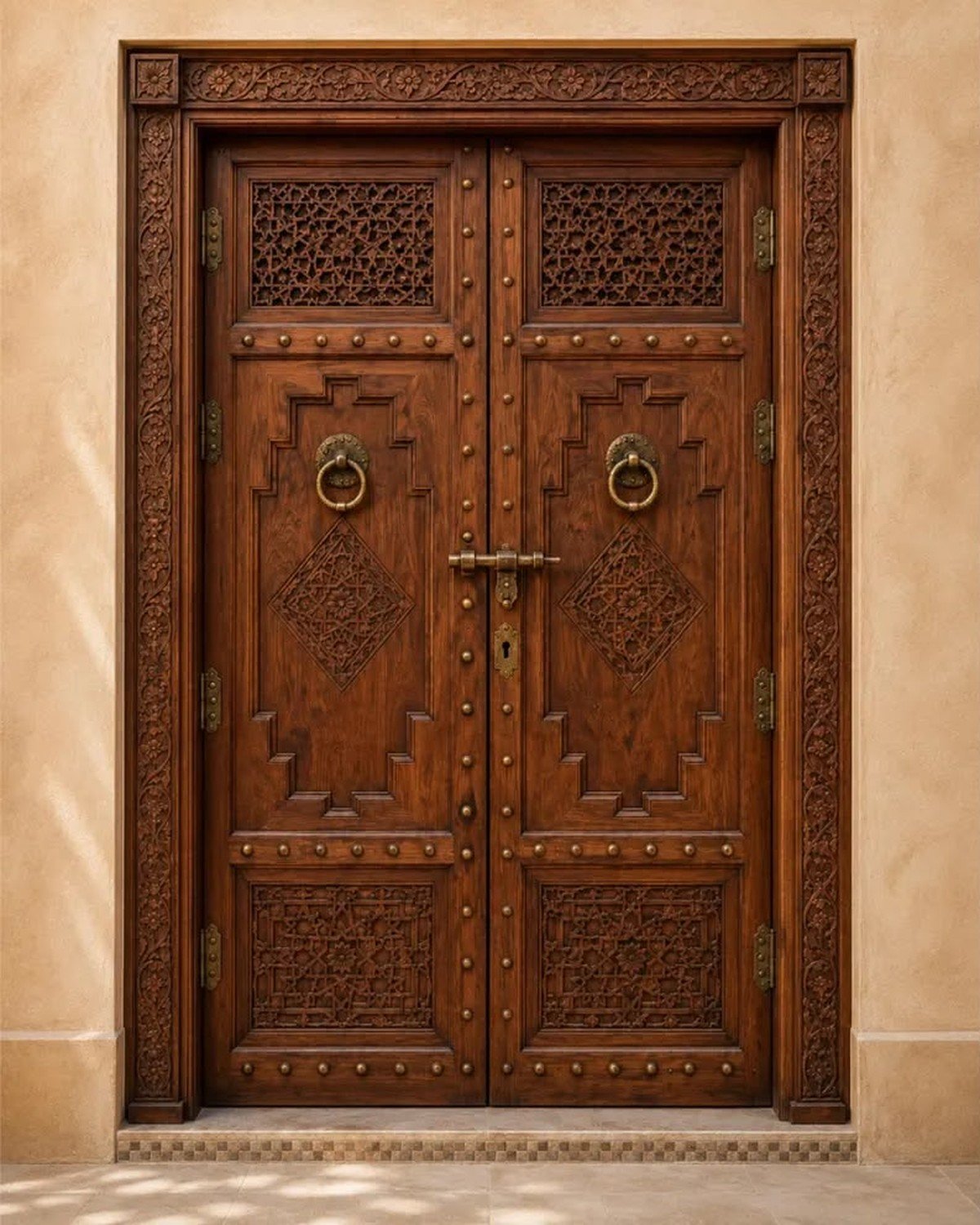
Styling Your Home with Moroccan Doors
Bringing the Riad aesthetic into a modern home does not require an architectural overhaul. The goal is to introduce one or two focal points that honor the heritage of these pieces. When selecting Moroccan doors for a contemporary space, consider the scale. A full-sized, double-leaf door can serve as a dramatic entrance to a library or a master suite, while smaller, single-panel doors can be repurposed as wall art or custom cabinetry fronts.
- Create a Transition: Use a carved door to signal a change in atmosphere, such as moving from a minimalist living area into a cozy, textile-rich reading nook.
- Balance with Minimalism: Because these doors are highly decorative, allow the surrounding walls to remain neutral, perhaps in a soft tadelakt plaster or a muted lime wash.
- Lighting is Key: Position these doors where natural light can catch the depth of the carvings, casting long, dramatic shadows that change throughout the day.
Preserving the Craft
As you explore the history of these architectural treasures, it is important to remember that every piece is an investment in human skill. Organizations like ALQASR work to sustain these ancient workshops from its Marrakech atelier, ensuring that the techniques of the maâlems—who balance raw physical strength with delicate precision—are not lost to the efficiency of industrial manufacturing.
By incorporating these authentic Moroccan doors into your own living space, you are not just decorating; you are helping to preserve a cultural narrative that has defined the Riads of Morocco for a millennium.
The Symbolism Behind the Patterns
The geometric carving on a traditional door is rarely decorative alone. The eight-pointed star, or khatem, appears again and again in Moroccan woodwork and zellige tilework, and represents balance and the infinite nature of creation in Islamic art — a pattern that can theoretically repeat forever without a single gap. Interlocking lines radiating from a central point are meant to draw the eye inward, a visual echo of the private, contemplative courtyards these doors so often guard.
Color carries its own meaning too. Deep blue, common on doors in Chefchaouen and Essaouira, is traditionally associated with protection and the sky; green, the color most closely tied to Islam, appears on doors leading into mosques and religious buildings; and the warm ochre and terracotta tones favored in Marrakech connect the door visually to the rammed-earth walls that surround it. None of this is accidental — for the maâlems who carve these entrances, pattern and color are a language as much as a craft.
Caring for Your Moroccan Door
A well-made cedar door, properly maintained, will easily outlast the building around it — some of the doors still standing in Fes’s medina are well over a century old. The wood itself needs little beyond a light coat of natural wax or tung oil once or twice a year, applied with a soft cloth after a gentle dusting; this keeps the cedar’s natural insect-repellent oils from drying out and preserves its warm color. Avoid harsh commercial cleaners or anything with ammonia, which can strip the finish and dull the hand-carved detail.
Brass and iron hardware ages beautifully on its own, developing a soft patina that most owners choose to leave alone rather than polish away. If you do want to restore the original shine, a mild brass polish and a soft brush worked into the carved recesses will do the job without damaging the surrounding wood. For doors installed in direct sun or coastal climates, an extra coat of wax before the harshest months of the year goes a long way toward keeping Moroccan doors looking as sharp as the day they arrived.
Frequently Asked Questions About Moroccan Doors
How long does a hand-carved Moroccan door take to make? Depending on the size and the density of the carving, a single door can take a workshop anywhere from three to eight weeks, since every pattern is cut by hand rather than machine-routed.
Can Moroccan doors be customized to fit non-standard openings? Yes — because each piece is made to order, artisans can adjust height, width, and panel configuration to fit an existing frame rather than forcing a standard size.
Do Moroccan doors need special preparation for international shipping? Reputable workshops season and stabilize the cedar before export and crate each door individually, so it can adapt to a new climate without warping once installed.
Ultimately, the beauty of Riad design lies in its intention. It is a philosophy that prioritizes the inner world, the privacy of the home, and the celebration of handcrafted detail. Whether you choose a stately entrance door or a smaller mirror framed in similar motifs, these pieces invite a sense of stillness and historical depth into your home, grounding your space in the timeless elegance of Moroccan craftsmanship.
Explore Our Handmade Moroccan Doors & Mirrors
Explore the atelier: discover our handmade Moroccan doors, including Marrakech Grande, Bab Al Andalus and Nacre Marquetry.