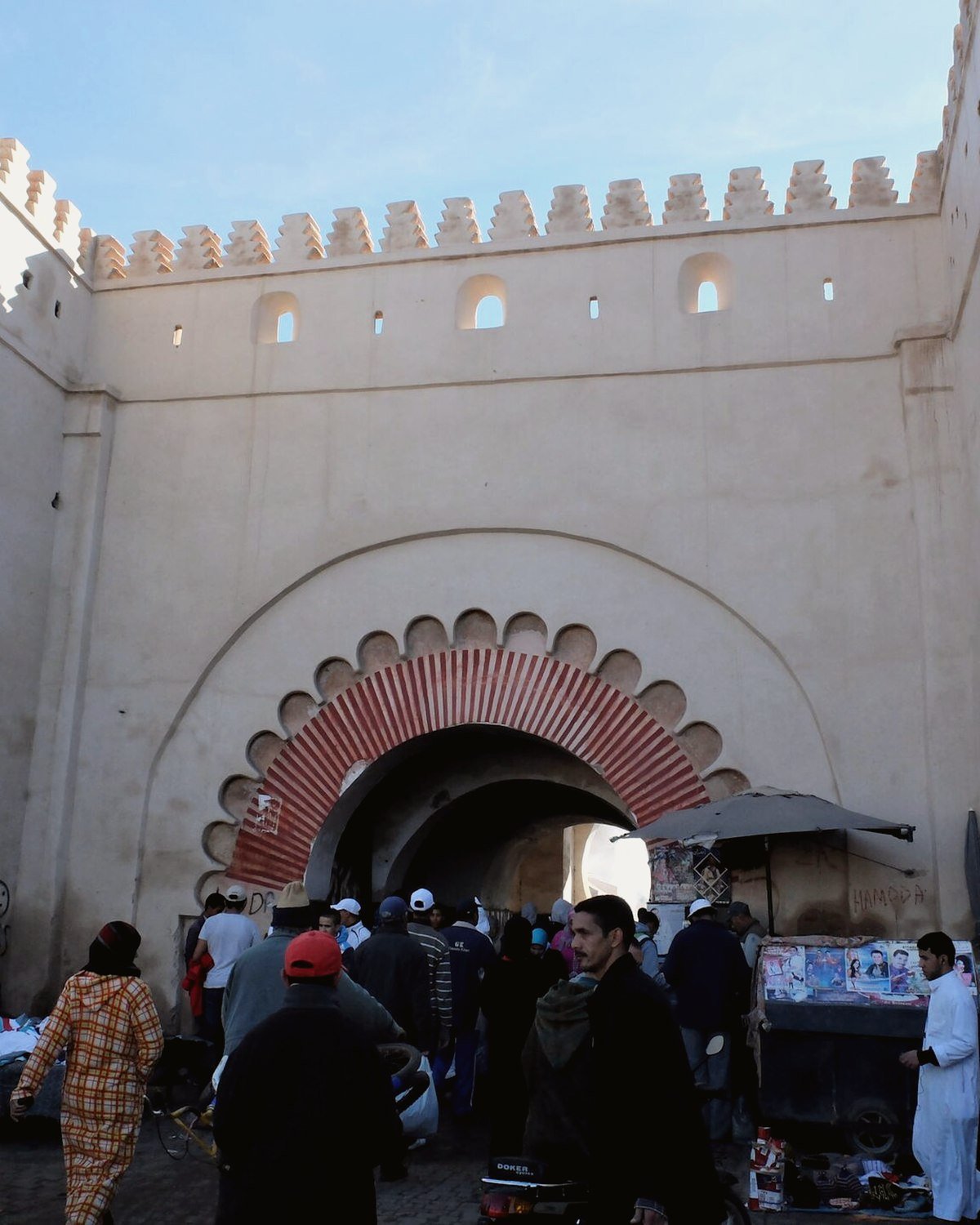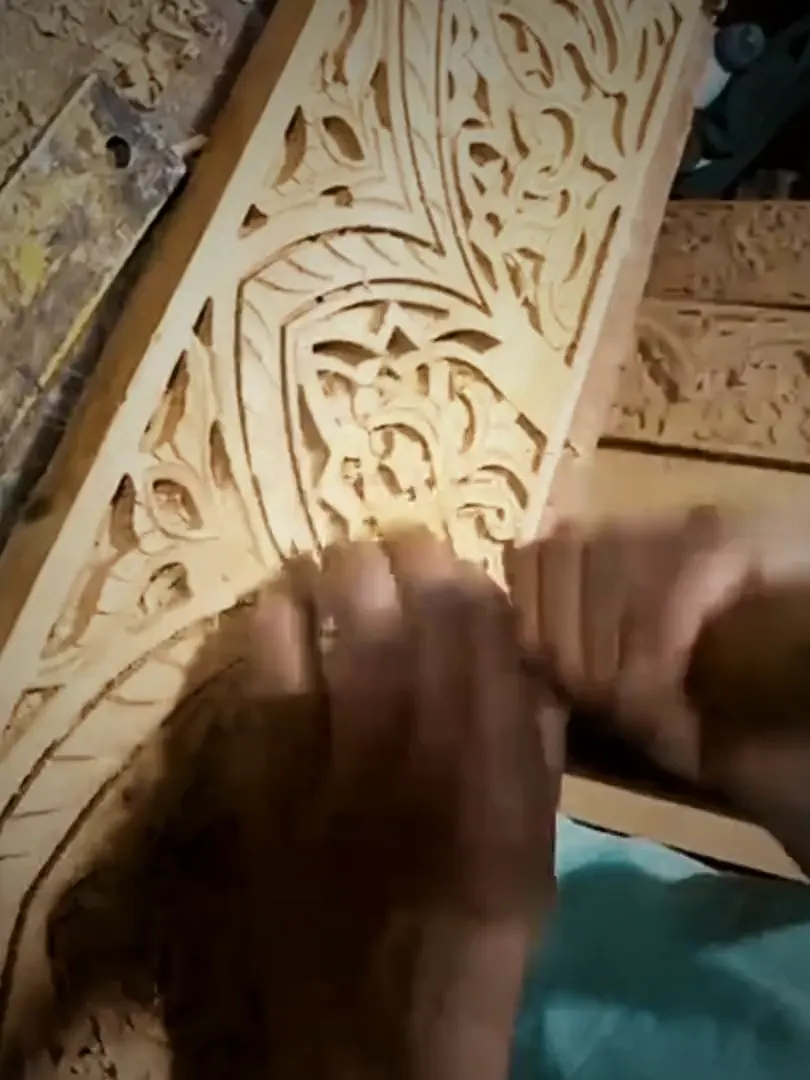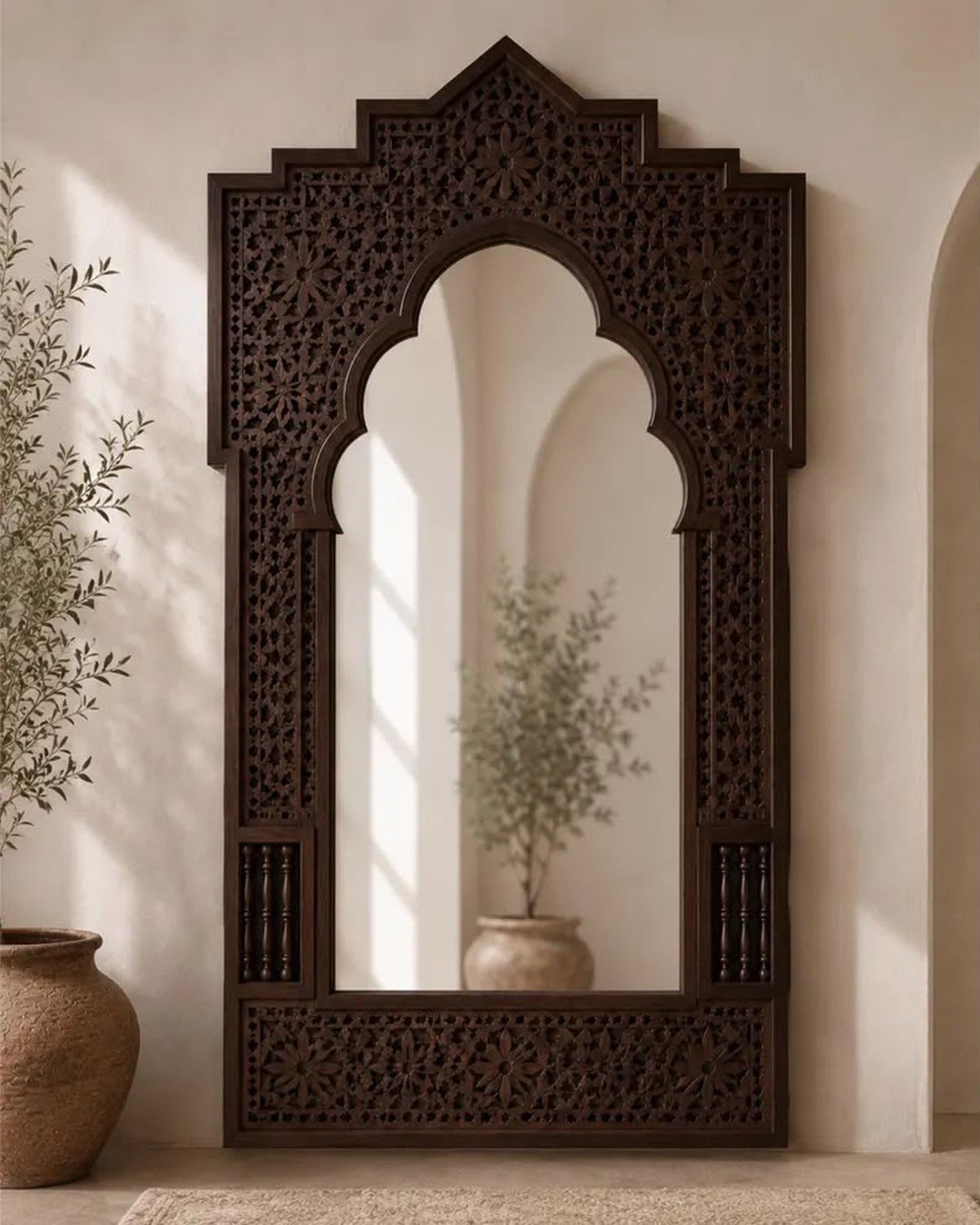
Marrakech architecture is a masterclass in geometry, light, and patience. Rooted in centuries of history, it balances the rigid strength of cedarwood with the fluid cooling properties of zellige tilework. When curating your Moroccan living room decor, you are not just choosing furniture; you are inviting a piece of Moroccan heritage into your home.
Preserving these elements requires an understanding of the materials used by master craftsmen. Whether it is a hand-carved cedar door or a reflective brass-framed mirror, authentic Moroccan pieces are designed to evolve with age. Proper care ensures these treasures remain vibrant for generations.
The Heart of Moroccan Living Room Decor: Cedarwood Care
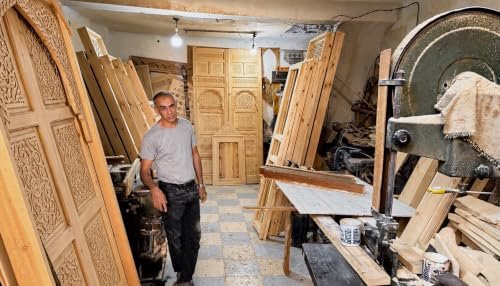
Atlas cedar is the backbone of traditional Marrakech carpentry. It is prized for its aromatic resin and dense, durable grain. Over time, this wood may dry out, making consistent humidity control essential for maintaining your Moroccan living room decor.
Cleaning and Nourishing Cedarwood
Avoid harsh chemical cleaners that strip the wood of its natural oils. Instead, dust your carved cedar pieces regularly with a soft, dry microfiber cloth. If the wood appears dull, apply a small amount of high-quality beeswax or cedar oil to restore its natural luster.
Managing Environmental Factors
Sudden changes in temperature can cause cedar to warp or crack. Keep your artisan-made pieces away from direct heat sources like radiators or fireplaces. If you live in a particularly dry climate, a small humidifier can help prevent the wood from becoming brittle.
Preserving Zellige and Intricate Tilework
Zellige is a hand-cut mosaic technique that defines the aesthetic of a classic Marrakech riad. Each tile is uniquely shaped by hand, meaning the surface is never perfectly flat. Keeping this element of your Moroccan living room decor clean requires gentle handling.
Routine Maintenance
Zellige tiles are porous and can absorb liquids if not properly sealed. Clean them using a soft cloth dampened with warm water and a neutral pH soap. Never use acidic cleaning agents, such as lemon or vinegar, as these can etch the glazed surface permanently.
Stain Prevention
If you have a zellige-topped side table, always use coasters to prevent staining. Because ALQASR artisans finish these pieces with traditional methods, the tiles are meant to withstand light use, but they remain sensitive to heavy chemical exposure.
Brass Accents and Metallic Finishes
Hand-hammered brass is the jewelry of Moroccan interiors. Whether featured on a mirror frame or a door panel, brass develops a beautiful patina over time. Many collectors prefer this aged look, but if you wish to maintain a bright shine, specific care is necessary.
Polishing Techniques
Use a specialized brass polish applied with a soft cotton rag to remove oxidation. Work in small, circular motions to avoid scratching the intricate hand-etched patterns. Always wipe away excess polish, as residue can harden and dull the finish.
Protecting Against Oxidation
High humidity accelerates the tarnishing process. If you live in a coastal area, consider applying a thin coat of microcrystalline wax to your brass fixtures. This provides a breathable barrier that keeps the metal looking brilliant while allowing the artisan’s metalwork to breathe.
Authentic Craftsmanship in Modern Spaces
True Moroccan living room decor relies on the intentional placement of artisan pieces. A hand-carved door functions best when installed by a professional who understands the expansion properties of cedar. Similarly, a brass-framed mirror from ALQASR serves as a focal point that captures natural light and expands the visual space.
Balancing Tradition and Utility
Integrate your hand-crafted pieces carefully to avoid cluttering the visual flow. Allow the complex geometry of the woodwork to stand against simpler textures like linen or wool. This balance highlights the skill of the Moroccan artisans while keeping the room functional and inviting.
Frequently Asked Questions
How do I identify genuine artisan-made cedarwood?
Authentic cedar has a distinct, deep scent and shows slight variations in carving depth. Machine-made reproductions lack the tactile ‘soul’ and organic imperfections found in items hand-chiseled by Marrakech masters.
Can zellige tiles be used in high-traffic areas?
Yes, but they require careful installation on a stable base. Zellige is durable, but because each tile is hand-cut, it is best suited for decorative surfaces or walls where it can be admired without constant heavy impact.
Why does my brass item change color?
Brass naturally reacts with oxygen and moisture in the air to create a patina. This darkening is a sign of authenticity and quality material, not a defect in the metal’s composition.
Explore Our Handmade Moroccan Doors & Mirrors
Further reading: Tadelakt plaster on Wikipedia.