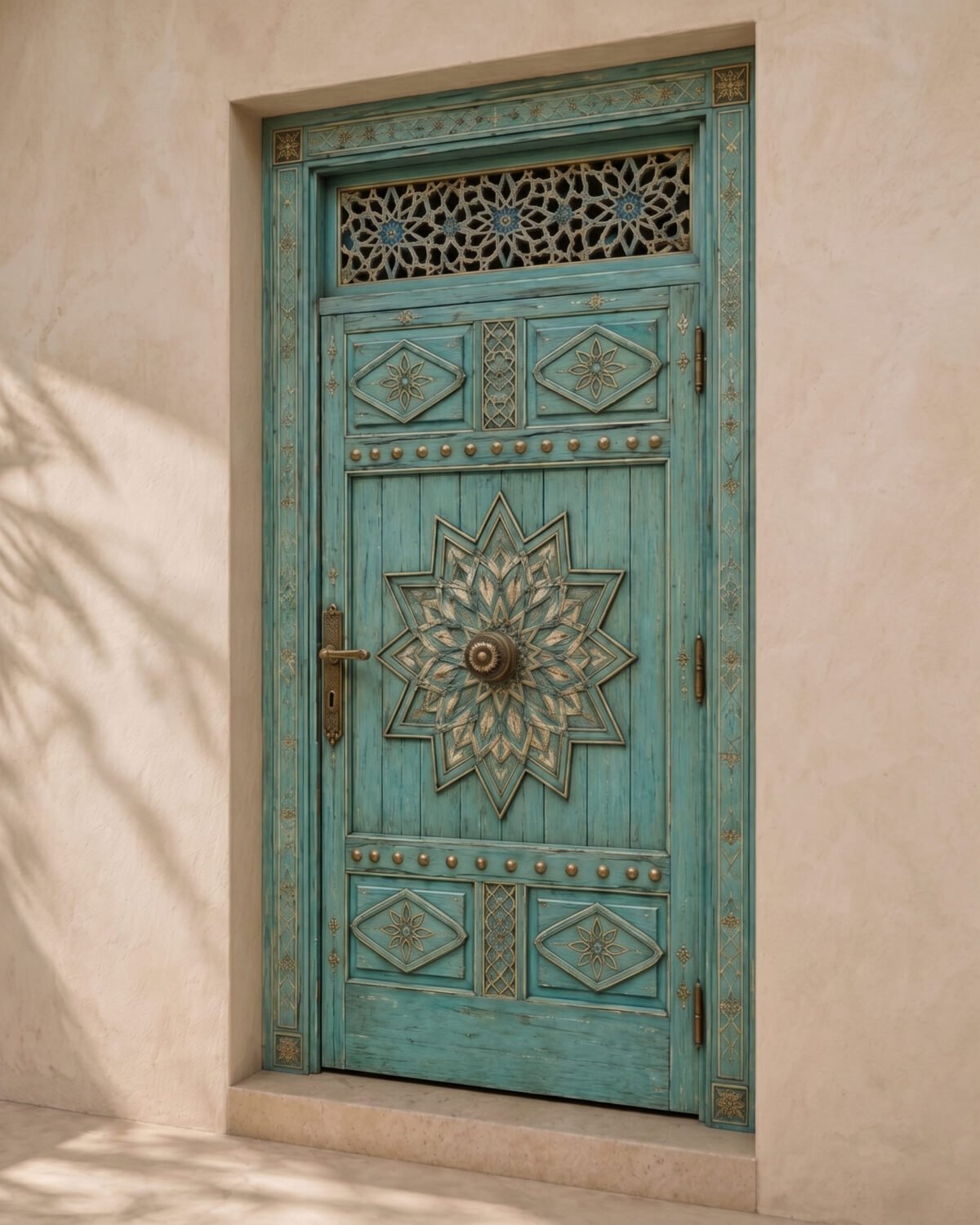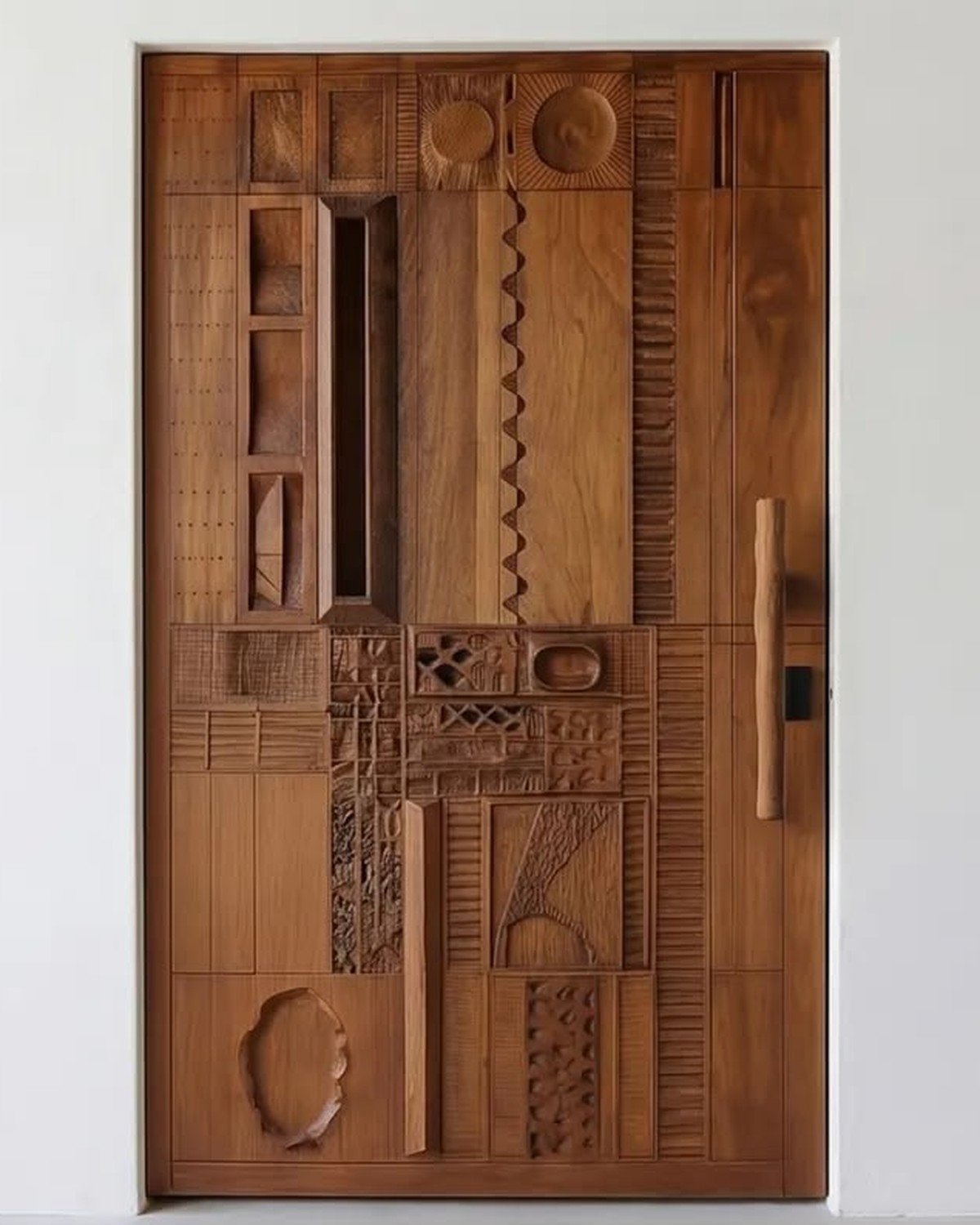

When exploring Moroccan front door ideas, one quickly realizes that these are not merely functional entryways, but historical artifacts of North African heritage. The traditional crafts of Marrakech serve as the heartbeat of this architectural tradition, blending geometry, botany, and spiritual geometry.
Understanding the provenance of these pieces is essential for their care. Whether you are looking for Moroccan front door ideas to inspire a renovation or trying to maintain an existing heirloom, knowing the materials is the first step toward longevity.
The Legacy of Marrakech Craftsmanship
Marrakech is the artistic and cultural capital of Morocco, renowned for a level of detail that has remained unchanged for centuries. Artisans in the medina utilize techniques passed down through generations, specifically focusing on the treatment of Atlas cedarwood.
Cedarwood and Natural Preservation
Cedar is the preferred material for these doors due to its density and natural resistance to decay. Because the wood is inherently oily, it handles the Moroccan climate exceptionally well, but it still requires periodic attention to remain vibrant.
The Role of Traditional Joinery
Unlike modern mass-produced doors, a true Marrakech-style door is often constructed using interlocking joinery without the need for synthetic glues. This allows the wood to expand and contract naturally with seasonal humidity shifts. Keeping your environment stable is key to preventing the stresses that lead to warping.
Implementing Moroccan Front Door Ideas
Integrating these pieces into a contemporary home requires a balance of respect for tradition and practical installation. When sourcing Moroccan front door ideas, consider how the intricate brass or copper inlays will age within your specific local climate.
Styling Your Entryway
A hand-carved door often acts as the focal point of an exterior facade. You can enhance its presence by surrounding it with neutral stone textures or contrasting, vibrant Zellige tile work, which complements the geometric precision of the woodwork.
Maintaining the Hardware
Many traditional doors feature hand-hammered brass knockers or nail-head detailing. To maintain these, avoid harsh chemical cleaners which can strip the natural patina. A light wipe with a soft, dry cloth is usually sufficient to remove dust and prevent oxidation.
Professional Care and Maintenance
If you own an authentic piece, such as one crafted by the artisans at ALQASR, you are holding a piece of living history. These items are meant to last for decades, provided they are given the right environment.
Seasonal Oiling
Every year, it is advisable to nourish the cedar with a natural, non-toxic wood oil. This replenishes the natural oils of the wood, keeping the grain visible and preventing the surface from becoming brittle or gray.
Protecting Against Elements
Direct exposure to harsh sun and rain can be challenging for any natural wood. If your Moroccan front door ideas involve a street-facing installation, consider an overhang or porch to shield the artisan details from extreme UV radiation and water pooling.
The Art of Moroccan Mirrors and Decor
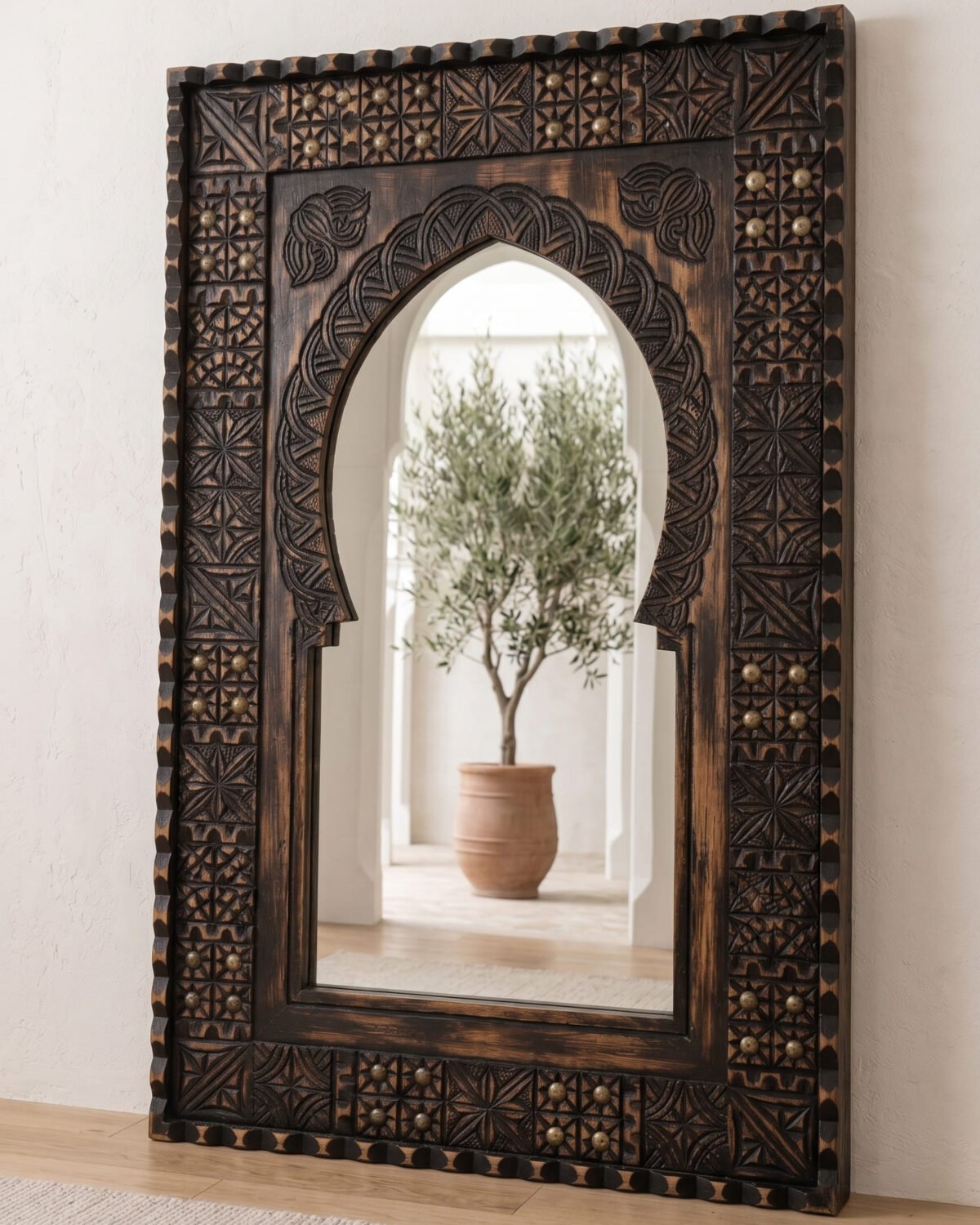
The same artisans who craft these grand entrances often apply their skills to smaller scale works, such as ornate Moroccan mirrors. These mirrors, often framed in carved cedar and brass, reflect the same geometric motifs found on the grandest palace gates.
By maintaining a consistent aesthetic throughout your home, you unify the space. Placing a mirror in an entryway opposite a traditional door creates a dialogue between the light and the intricate wood carvings, making the space feel expansive and intentional.
Frequently Asked Questions
How often should I treat my Moroccan wood door?
Under normal indoor conditions, a light application of natural oil once a year is sufficient to keep the wood supple and hydrated.
Can I use standard cleaning products on brass inlays?
No, avoid commercial brass cleaners as they are often abrasive. Use a soft, lint-free cloth, and if there is significant buildup, a mixture of lemon juice and baking soda applied very sparingly can help restore the luster.
Final Thoughts on Moroccan Front Door Ideas
The strongest Moroccan front door ideas honour the material first: solid cedar, hand-forged brass and carving that rewards a closer look. Choose a door that suits your façade rather than one that fights it, and let Marrakech craftsmanship set the tone for the rest of the home. These Moroccan front door ideas suit both traditional riads and contemporary villas, and our artisans are happy to help you turn any of these Moroccan front door ideas into a made-to-measure piece.
Explore Our Handmade Moroccan Doors & Mirrors

Further reading: Tadelakt plaster on Wikipedia.