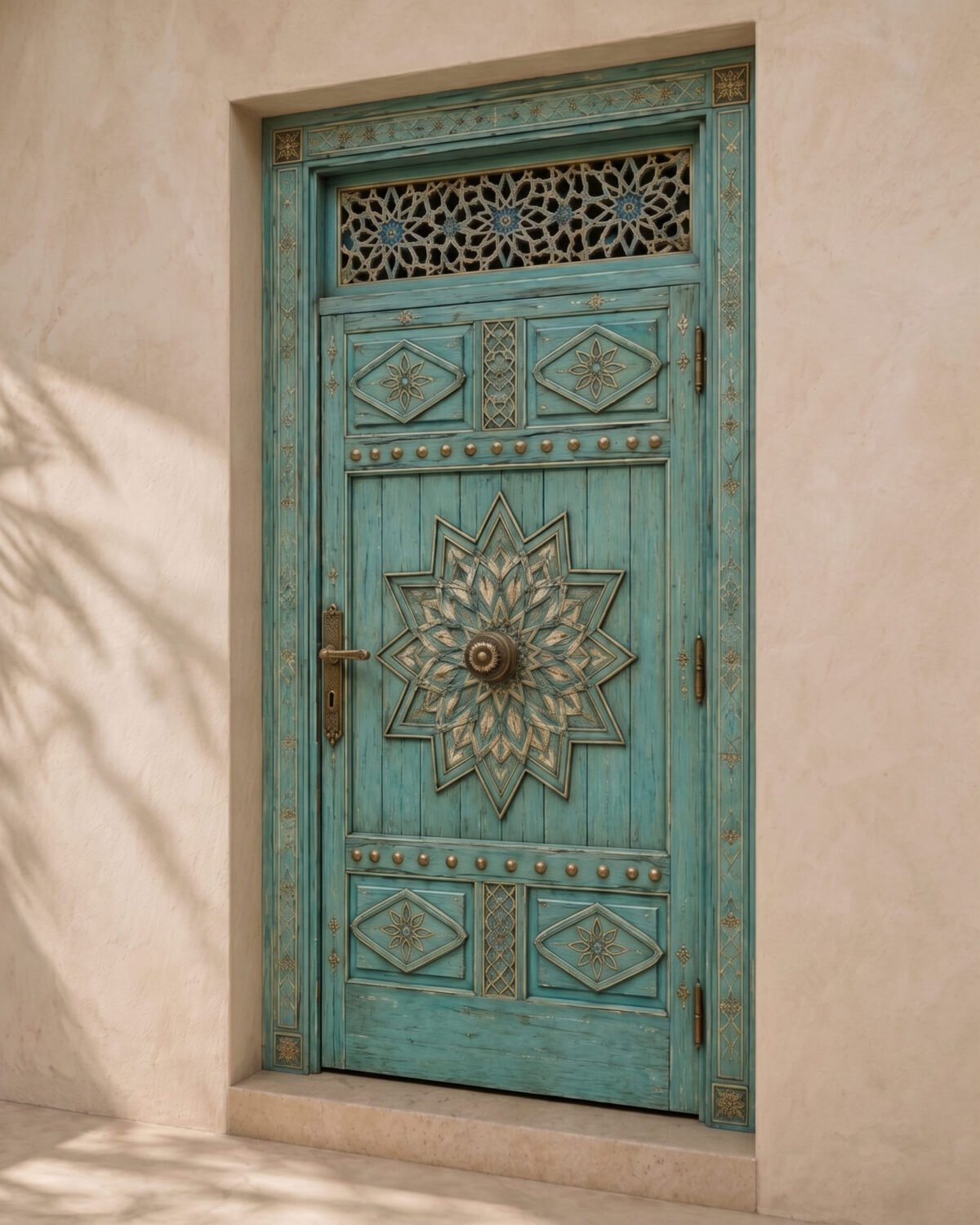
The Architectural Legacy of the Riad
The traditional Moroccan Riad is a masterclass in inward-facing architecture. While the exterior remains humble and windowless, the interior opens into a lush, light-filled courtyard that acts as the lungs of the home.
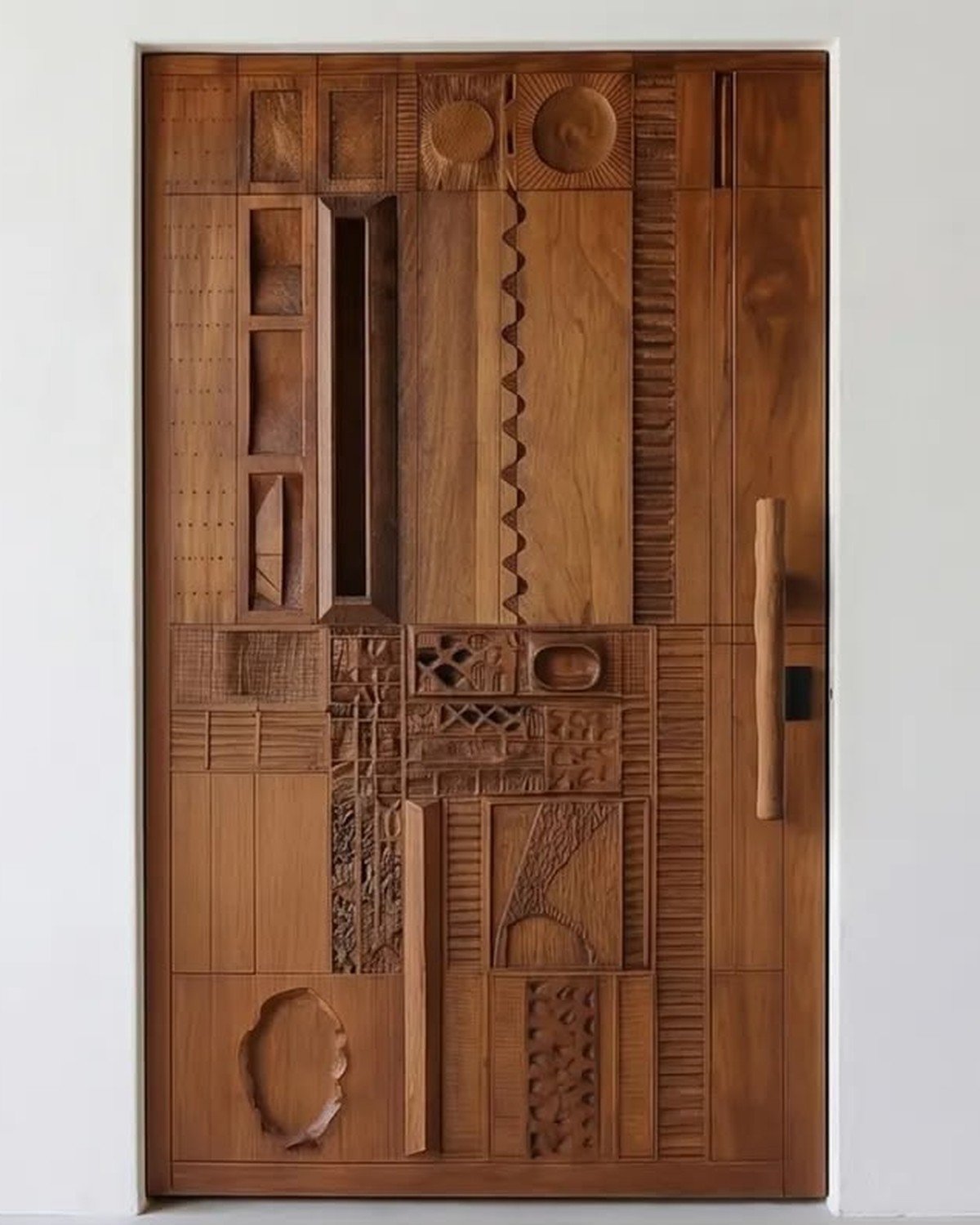
At the center of this sanctuary, one often finds majestic carved wood doors. These portals serve as more than mere thresholds; they are transitions between the chaotic outside world and the serene, private haven within.
In Riad design, symmetry and proportion are paramount. Every element, from the Zellige tilework to the archways, is calibrated to create a sense of balance. The doors themselves are often grand, floor-to-ceiling structures that draw the eye upward toward the intricate ceiling work.
The Art of Creating Carved Wood Doors
Creating these masterpieces is a multi-generational skill centered in the ancient medinas of Fes and Marrakech. Artisans primarily work with Atlas cedar, a timber prized for its aromatic scent, durability, and fine grain that holds delicate carvings perfectly.
From Raw Timber to Intricate Relief
The process begins with selecting seasoned cedar wood, which must be dried for months to prevent warping in varying climates. Masters of the craft use a specialized set of mallets and chisels to map out geometric patterns, often inspired by Islamic mathematical principles.
Carved wood doors are rarely painted; instead, they are finished with natural waxes or oils to highlight the wood’s deep, reddish-brown tones. This raw approach allows the natural character of the timber to age beautifully over decades, developing a unique patina that factory-made alternatives simply cannot mimic.
Integrating Moroccan Craftsmanship into Modern Spaces
You do not need to live in a Riad to appreciate the elegance of Moroccan craftsmanship. Whether you are renovating a historic home or designing a contemporary loft, incorporating a hand-carved piece creates an immediate focal point.
Modern interior designers often use these doors as statement pieces in neutral hallways or as dramatic entries to primary suites. Because pieces from workshops like ALQASR are commissioned individually, you can specify dimensions that suit your existing architecture while maintaining the authentic spirit of Fes artisan traditions.
Styling Tips for Your Home
- Pair dark, carved wood doors with white or lime-washed walls to emphasize the intricate relief work.
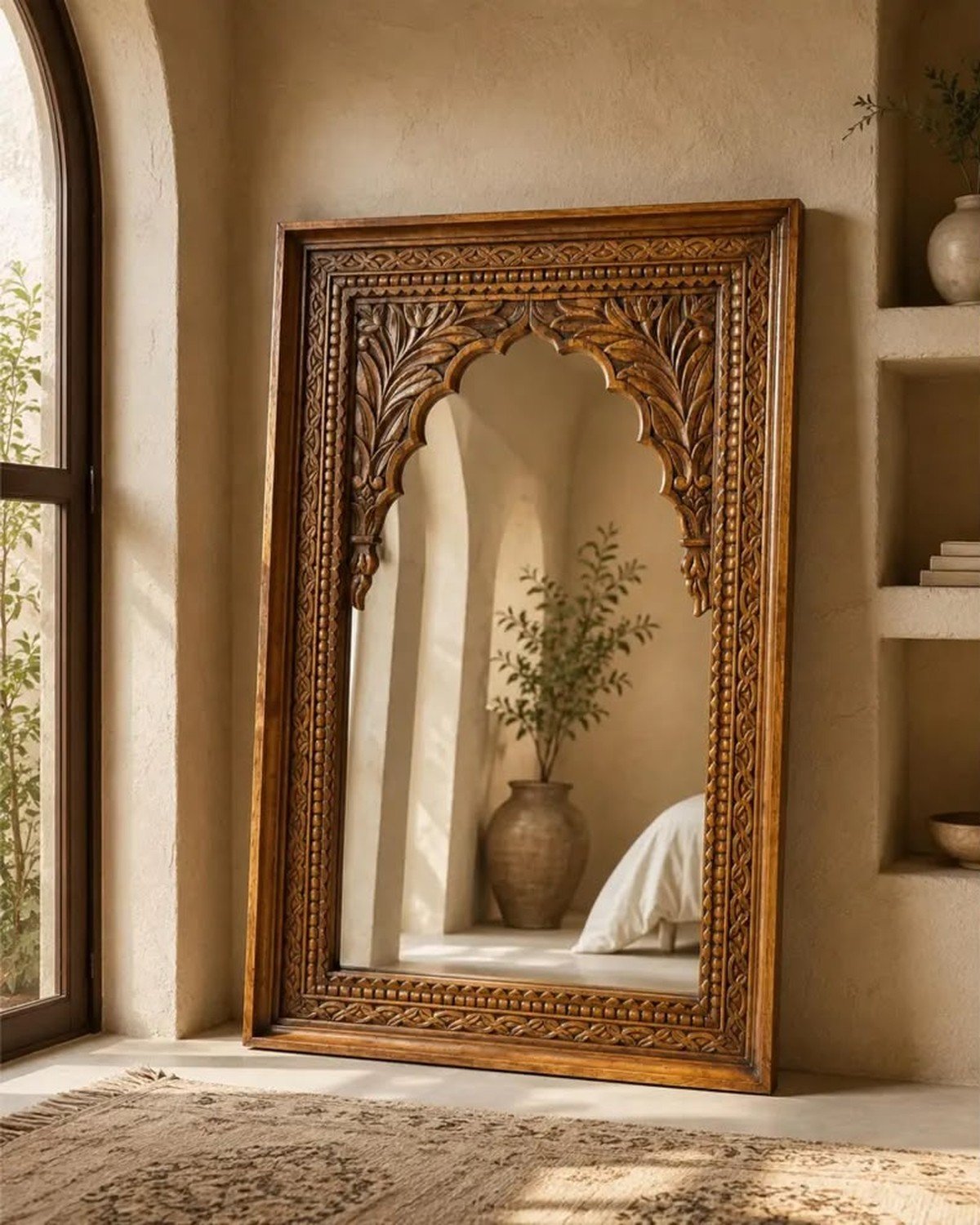
- Balance the masculinity of carved timber with softer elements like silk cushions, brass lanterns, or a handmade Moroccan mirror.
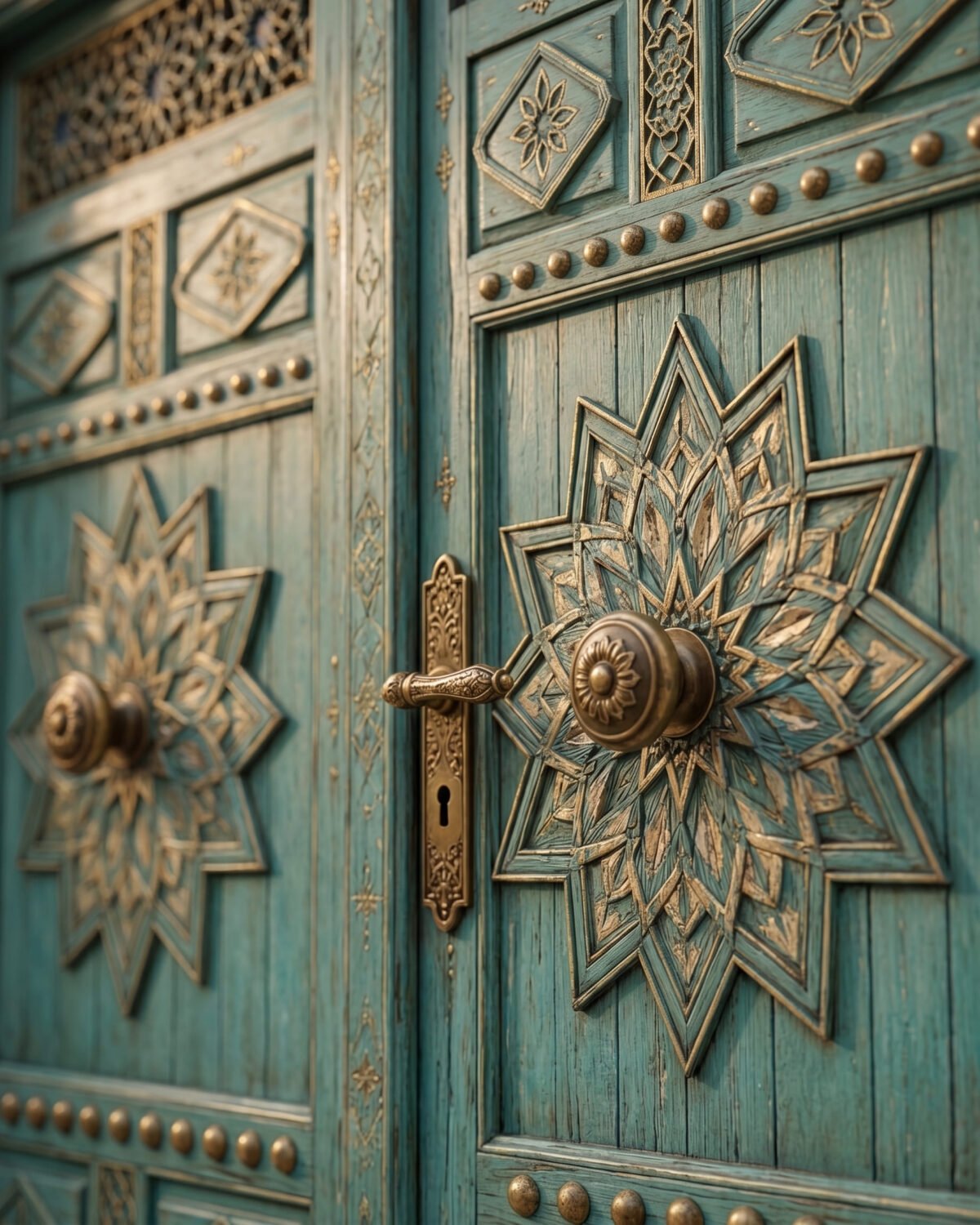
- Ensure the hardware—such as heavy brass knockers—is hand-forged to match the weight and history of the wood.
The Role of Detail in Riad Aesthetics
Riad aesthetics rely on the repetition of patterns, often referred to as ‘arabesque.’ When you look closely at authentic Moroccan woodwork, you will notice that the designs never have a true ‘end’; they are infinite loops that represent the spiritual concept of eternity.
This attention to detail extends to the metalwork integrated into the wood. Frequently, brass studs or filigree panels are inlaid directly into the frame, creating a striking contrast between the warmth of the cedar and the cool, reflective surface of the metal.
As makers of handmade Moroccan doors and mirrors, we often emphasize that these objects should be treated as functional art. They are designed to withstand the test of time, reflecting the patience and philosophy of the artisan who spent weeks meticulously shaping every curve.
Frequently Asked Questions
Why is Atlas cedar the preferred material for Moroccan doors?
Atlas cedar is highly resistant to insects and moisture, making it exceptionally durable. Its tight, uniform grain allows artisans to perform deep, precise carvings without the wood splitting, ensuring longevity.
How do I maintain hand-carved cedar doors?
Avoid harsh chemical cleaners, which can strip the natural oils. Instead, dust the carving with a soft-bristled brush and occasionally apply a high-quality, clear beeswax to keep the wood nourished and vibrant.
Explore Our Handmade Moroccan Doors & Mirrors
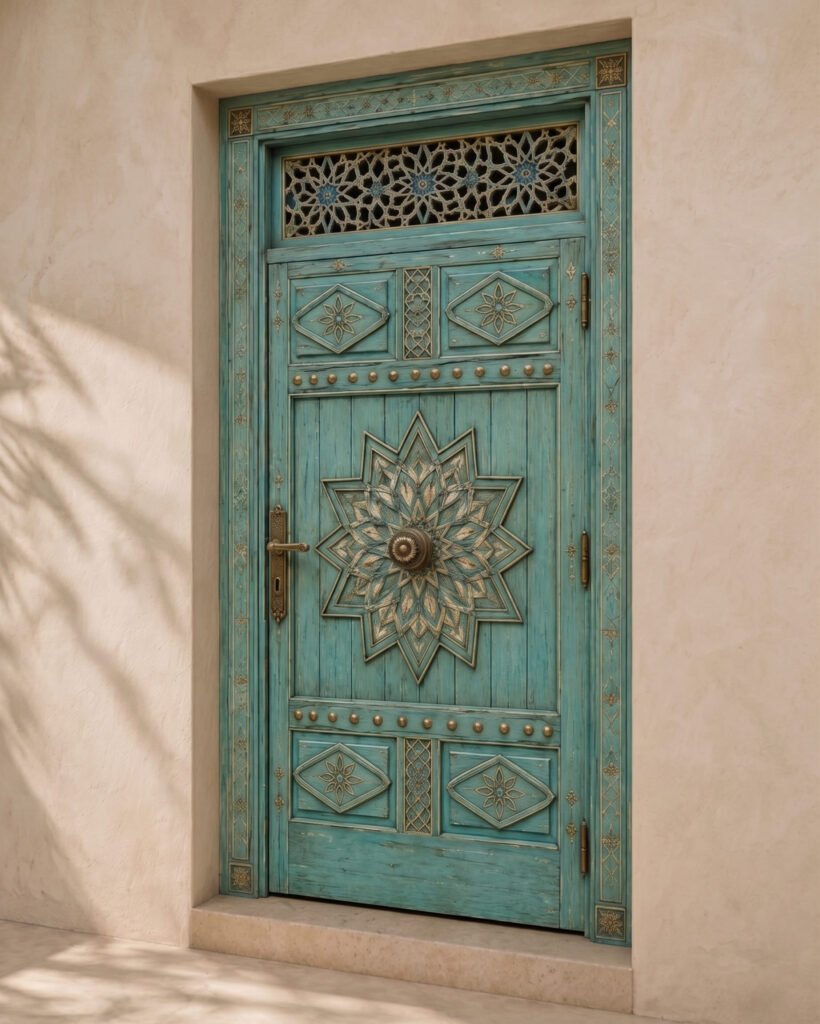
Further reading: Zellige tilework on Wikipedia.
Explore the atelier: discover our handmade Moroccan doors, including Riad Blanche and Atlas Portal. Read also our guide to authentic Moroccan doors.