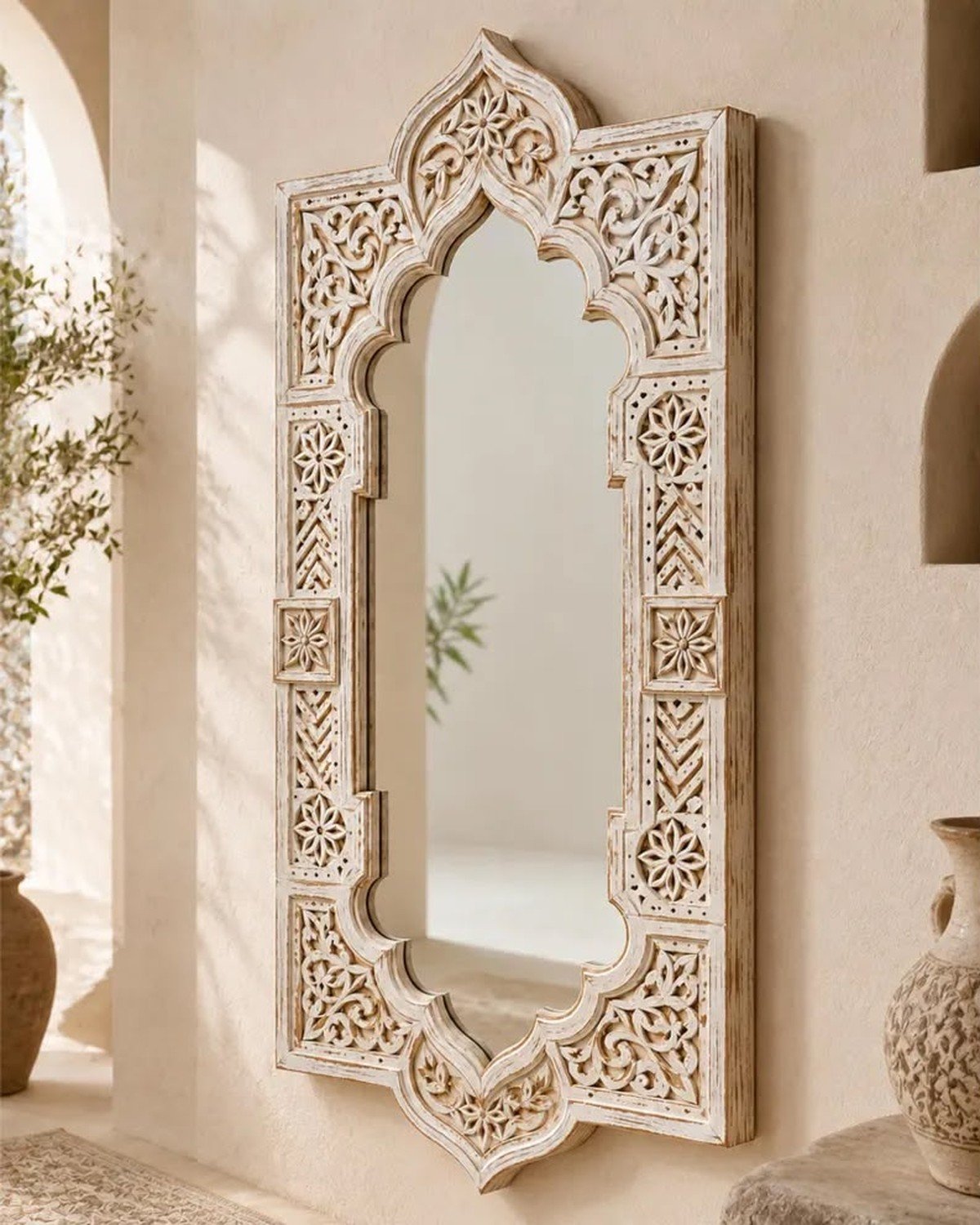
The Soul of Moroccan Interior Design
Moroccan interior design is rooted in a centuries-old philosophy that prioritizes privacy, comfort, and the harmonious balance of textures. It is an aesthetic defined by intricate geometric patterns, vibrant color palettes, and a deep reverence for natural materials like cedarwood and copper.
Among the most transformative elements in this design language are Moroccan mirrors. These pieces act as functional art, designed not just to reflect light, but to capture the essence of a room and frame it within an architectural narrative.
By integrating these artisanal treasures into a contemporary space, you bridge the gap between ancient craftsmanship and modern living. Whether placed in a minimalist hallway or a maximalist living room, these mirrors serve as the heartbeat of a well-curated interior.
The Craftsmanship Behind Authentic Pieces
From Fes to Your Home
True Moroccan artistry is inseparable from the cities of its origin. Fes, the spiritual and intellectual capital, is famous for its intricate metalwork and brass etching, while Marrakech is renowned for bold, carved wood and structural mastery.
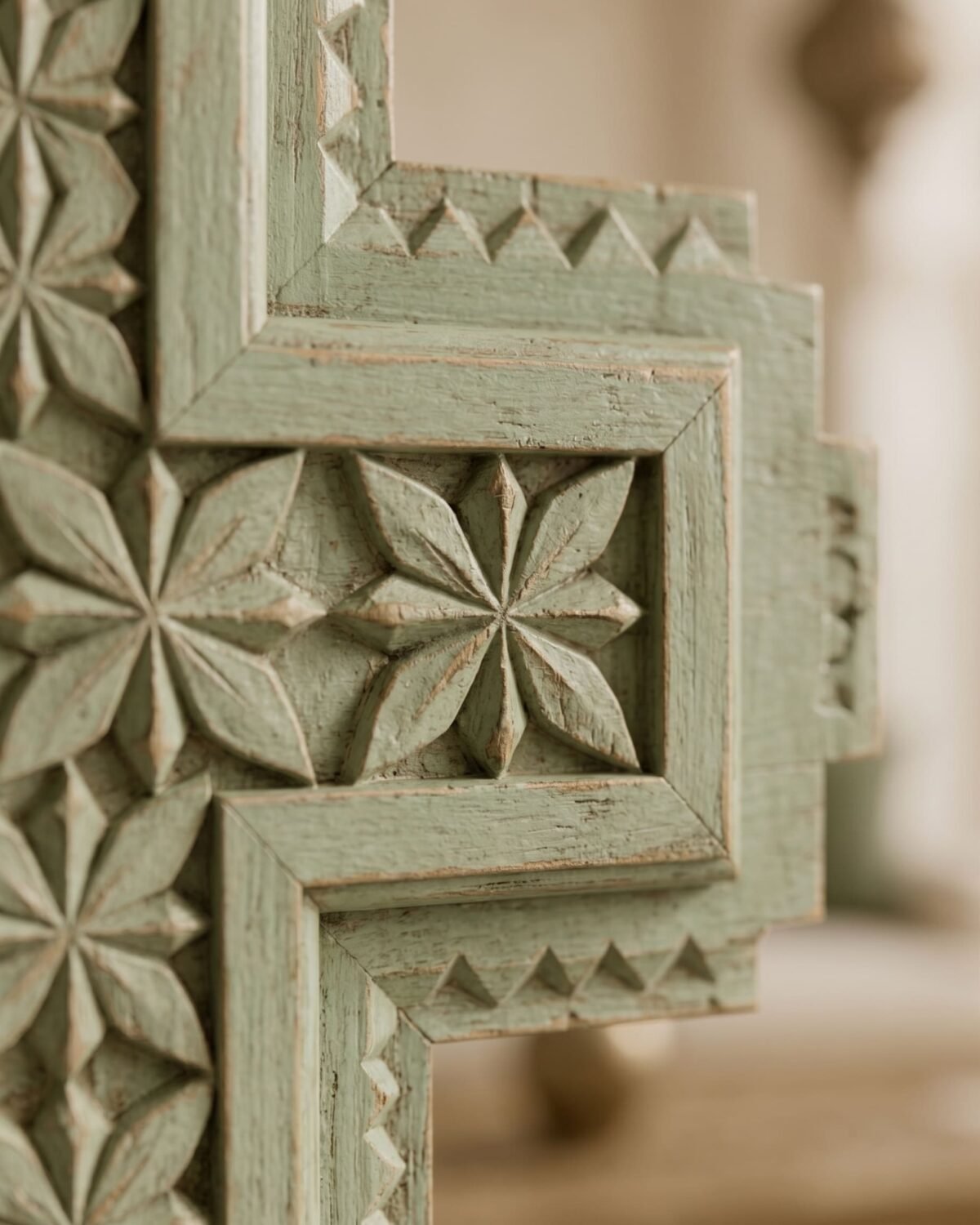
When you encounter high-quality Moroccan mirrors, you are often looking at the result of a multi-generational process. Master artisans, known as Maâlems, spend days hand-hammering sheets of brass or carving resilient cedarwood, a material prized for its aromatic scent and durability.
ALQASR works directly with these local artisans to ensure every detail honors the traditional geometry of the Maghreb. This dedication to technique is what distinguishes a mass-produced item from a legacy piece that ages beautifully over decades.
Styling Moroccan Mirrors in Modern Interiors
Creating Focal Points
A common mistake in interior styling is treating mirrors merely as functional objects. In Moroccan design, a mirror is an anchor that dictates the flow of energy and light within a room.
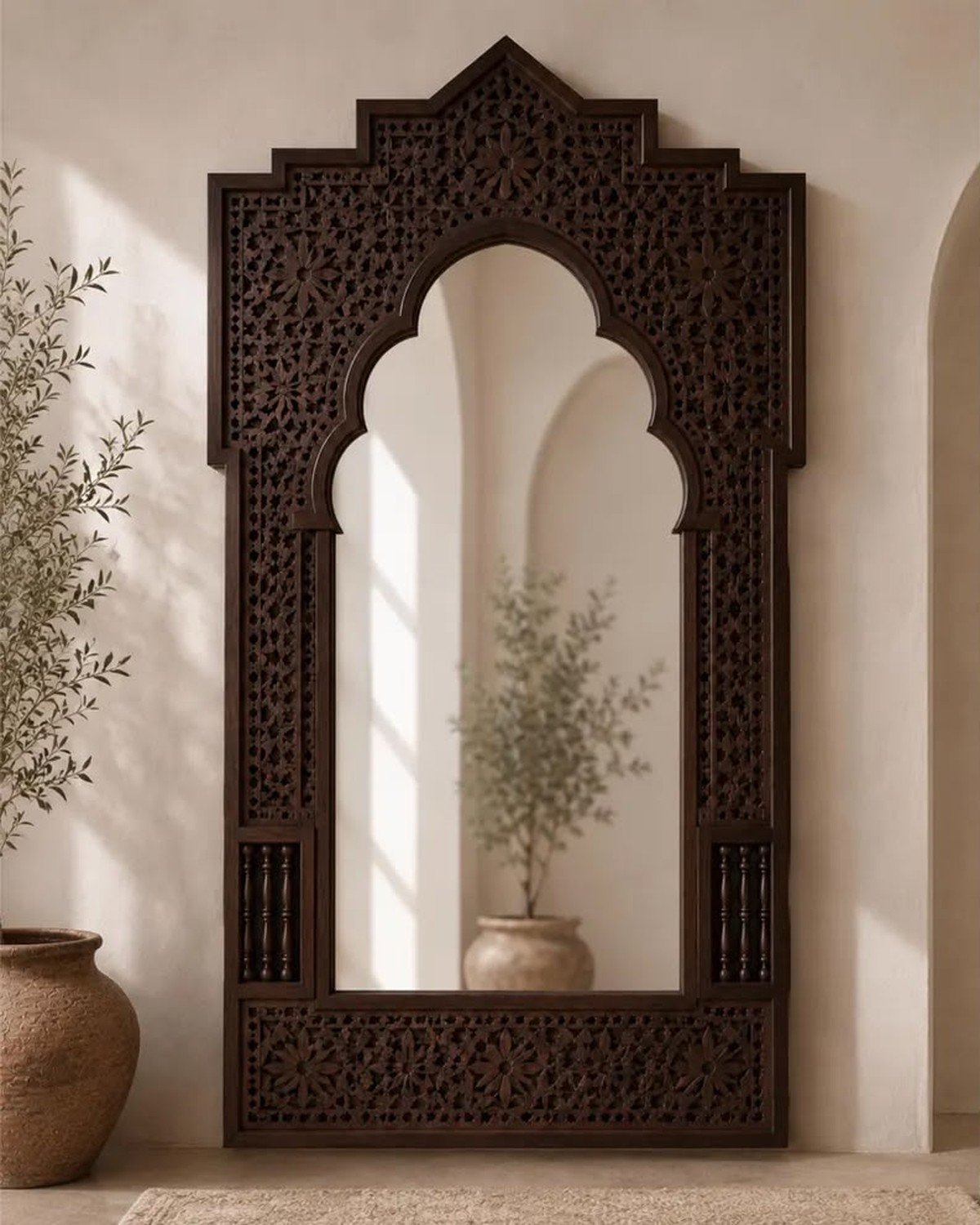
Try placing a large, arched brass mirror above a console table to mimic the iconic doorways found in a traditional Riad. This repetition of the archway motif creates a sense of architectural continuity that feels inherently sophisticated.
The Power of Zellige and Brass
If you prefer a more subtle approach, look for mirrors featuring zellige accents. These hand-cut, glazed terracotta tiles add a pop of color and texture that creates a stunning contrast against neutral, plastered walls.
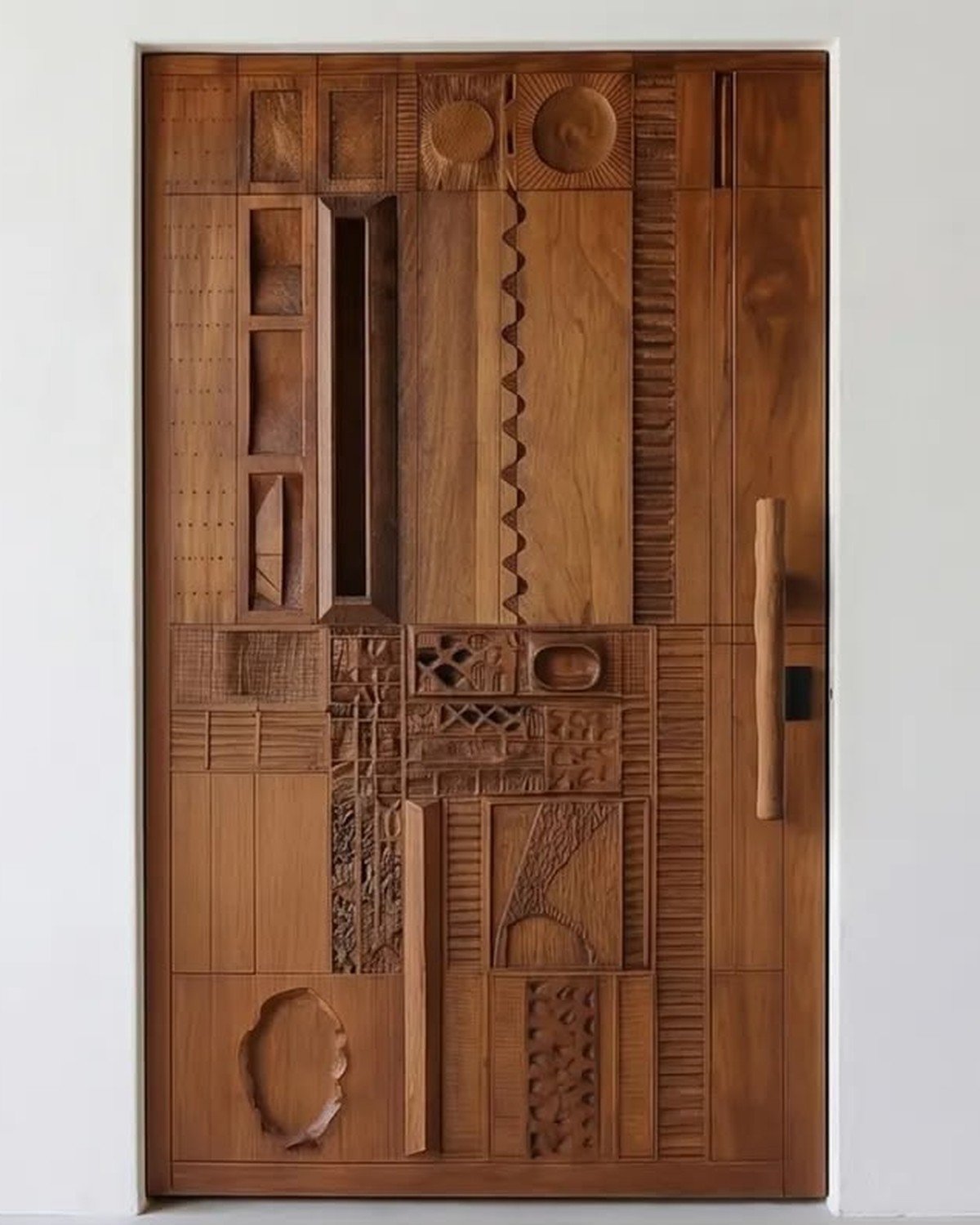
Pairing these mirrors with authentic Moroccan doors or simple linen textiles allows the intricate metalwork of the frame to take center stage. The interplay between the cool reflection of the glass and the warmth of hand-pounded brass is what gives these pieces their unique, inviting aura.
Preserving the Heritage of North African Art
Investing in artisanal decor is an act of cultural preservation. Every scratch in the brass or variation in the wood grain tells a story of the person who shaped it in a sun-drenched workshop in Morocco.
When you choose a handmade mirror, you are participating in a trade that has survived waves of industrialization. It is about valuing the imperfections that prove a human hand was involved in the creation process.
At ALQASR, the goal is to share this legacy with the world, ensuring that these intricate designs continue to inspire beauty in homes across the globe. By respecting the origin of these items, we ensure that the craft remains vibrant for future generations.
Frequently Asked Questions
How do I clean my handcrafted brass mirror?
Gently wipe the brass frame with a soft, dry cloth to remove dust. If the brass begins to dull over time, use a non-abrasive metal polish specifically designed for brass, applying it sparingly and buffing it carefully to maintain the natural patina.
Can Moroccan mirrors be used in bathrooms?
Yes, they can, but ensure the space is well-ventilated to prevent moisture buildup. If the mirror features cedarwood, the natural oils in the wood provide some protection, but it should be kept away from direct water splashes to ensure its longevity.
What makes these mirrors authentic?
Authentic pieces are defined by hand-hammered metalwork, non-uniform carvings, and the use of traditional materials like solid cedarwood. Unlike machine-made replicas, each handmade mirror will have slight variations that signify true artisanal labor.
Explore Our Handmade Moroccan Doors & Mirrors
Further reading: Tadelakt plaster on Wikipedia.
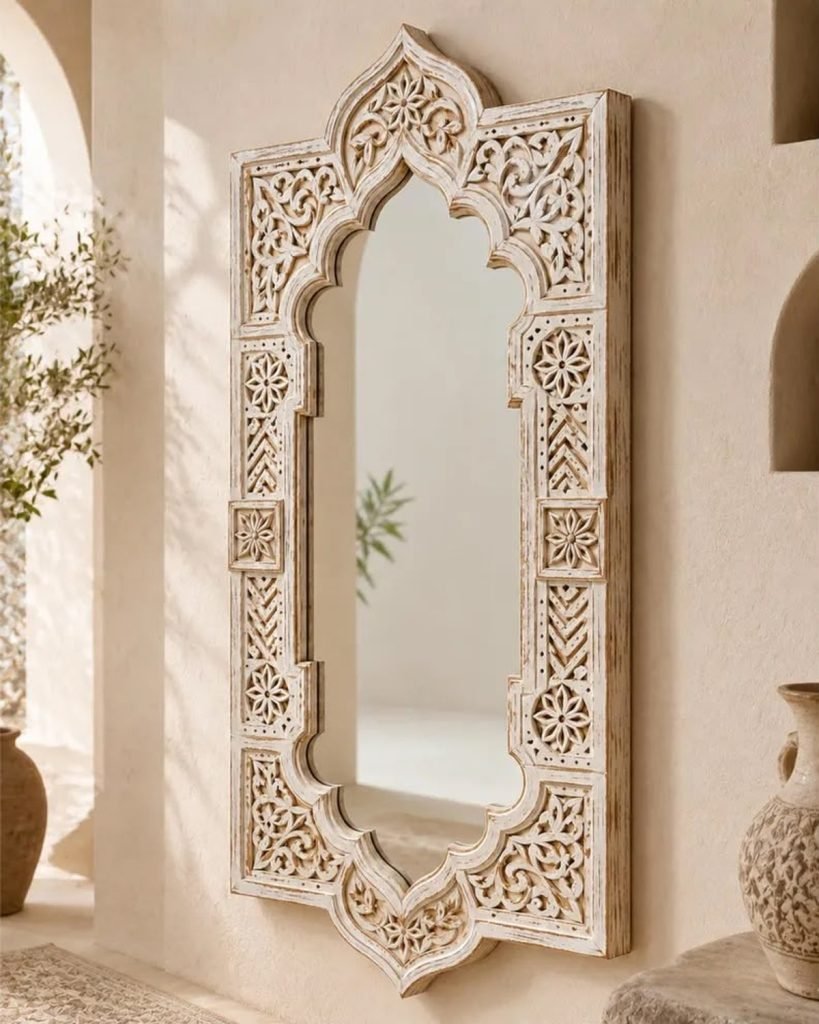
Explore the atelier: discover our Moroccan mirrors, including Nacre Arch and Atlas Leaf. Read also how Moroccan mirrors are made.