The Spirit of Marrakech in Moroccan Living Room Decor
Marrakech, the artistic and cultural heart of Morocco, is a city where time seems to stand still within the walls of its ancient medina. When considering Moroccan living room decor, one is essentially inviting the intricate geometry and deep history of Marrakech into their home. The city is renowned for masters of woodcarving, brass hammering, and hand-painted Moroccan pottery.
Integrating these elements into your sanctuary requires an understanding of the balance between raw materials and refined labor. True beauty in this aesthetic lies in the repetition of patterns and the warmth of organic textures. By focusing on authentic provenance, you transform a living space into a curated gallery of North African heritage.
The Mastery of Cedarwood and Brass
The Fassi artisan is a guardian of techniques that have remained largely unchanged for centuries. Cedarwood, sourced from the Atlas Mountains, is the foundational material for the grandest architectural elements. Its durability and aromatic scent make it the preferred choice for structural accents that anchor a room.
Carving and Inlay Techniques
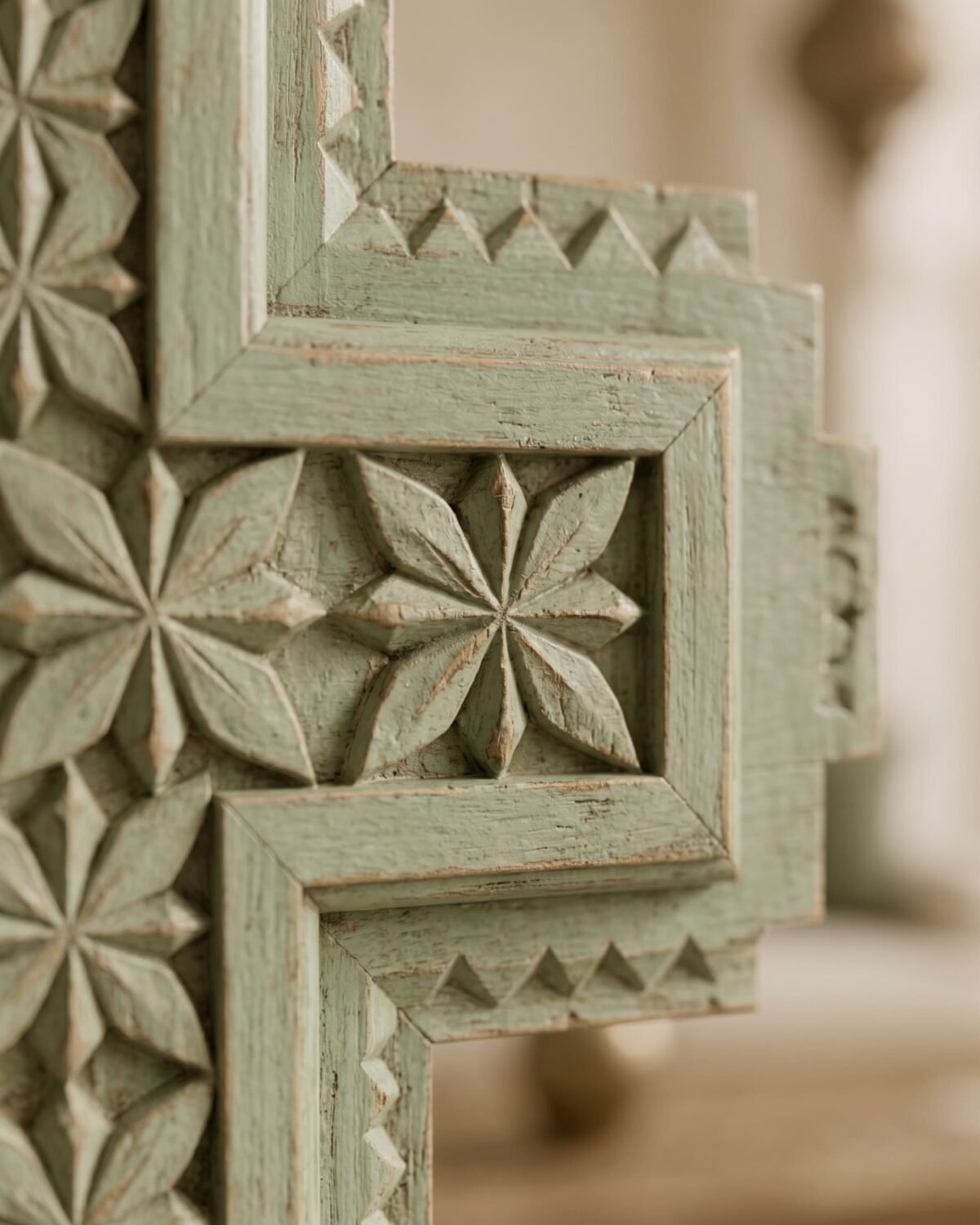
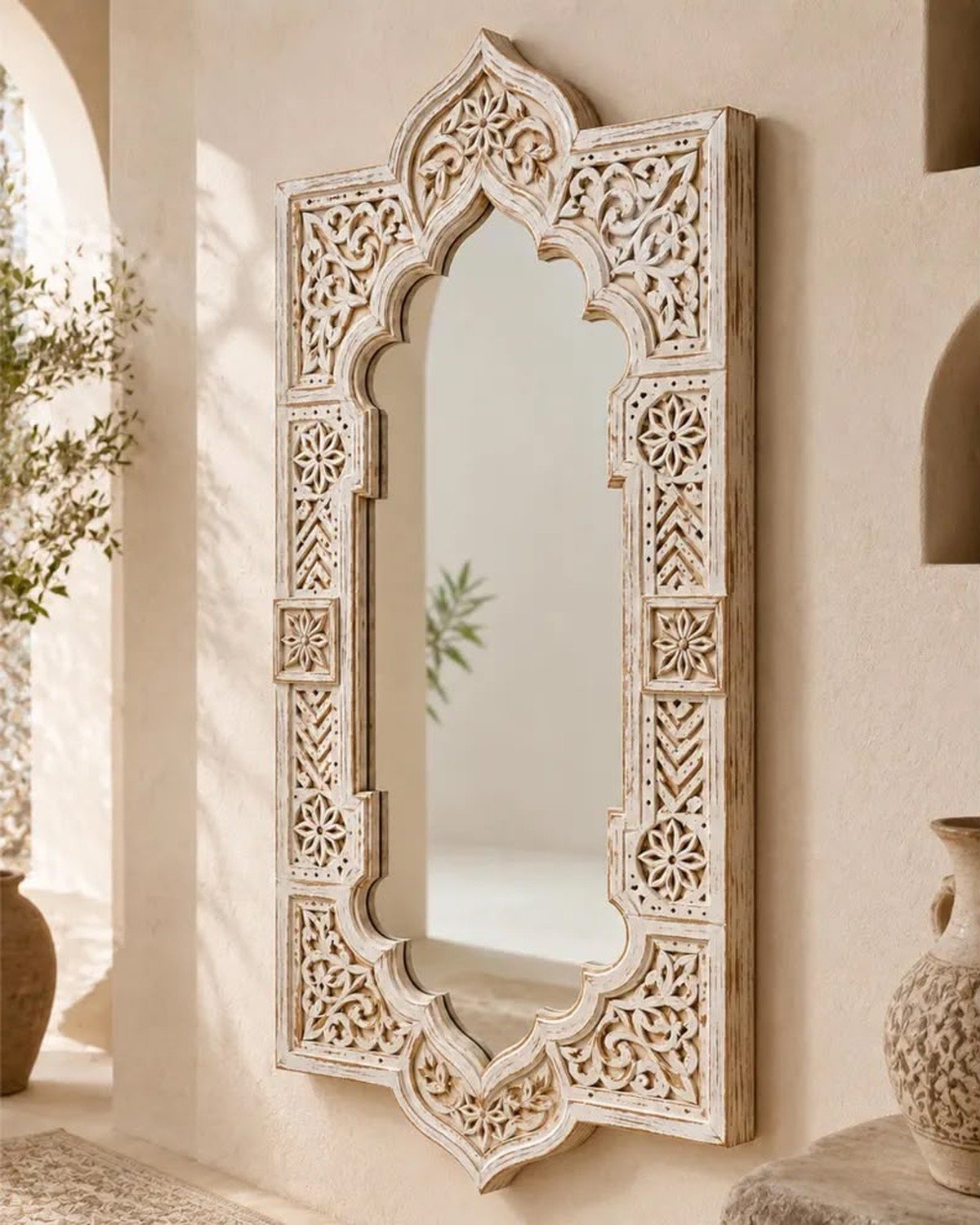
Intricate woodwork often features ‘geometrical star’ patterns, representing the infinite nature of the universe. These pieces, whether they are grand entryway statements or bespoke mirrors from makers like ALQASR, serve as the focal point of the room. When searching for the right Moroccan living room decor, look for deep, hand-chiseled reliefs rather than machine-made imitations.
The Role of Brass and Copper
Brass adds a metallic warmth that contrasts beautifully with the dark tones of cedarwood. In Marrakech, artisans use a technique called naqsh, which involves hand-tapping delicate floral or calligraphic designs into the metal surface. These brass accents are often found in lanterns or as decorative detailing on custom Moroccan doors.
Styling Your Space with Zellige and Texture
No discussion of Marrakech is complete without mentioning Zellige, the hand-cut glazed terra cotta tiles. These tiles are the backbone of classical Moroccan architecture and bring unparalleled texture to any floor or wall. Each piece is fired in wood-burning kilns, ensuring slight variations in color that make the final installation unique.
Balancing Colors and Patterns
To keep Moroccan living room decor from feeling overwhelming, balance the busyness of Zellige patterns with neutral walls. Use soft, earth-toned tadelakt plaster—a waterproof, lime-based plaster—to provide a smooth, organic backdrop. This creates a refined stage for your more ornate furniture pieces to shine.
Curating Artisanal Accents
Consider the placement of an authentic, hand-carved mirror to bounce light into darker corners of the room. At ALQASR, the focus remains on preserving the soul of these objects, ensuring that each mirror or door carries the tactile legacy of the Marrakech atelier. When these pieces are placed thoughtfully, they ground the entire design scheme.
Integrating History into Modern Homes
The beauty of Moroccan living room decor is its adaptability to contemporary homes. You do not need to replicate a Fassi palace to capture the spirit of the region. Instead, choose two or three high-quality artisanal pieces and let them dictate the room’s narrative.
Focus on quality over quantity to ensure the longevity of your design. Whether it is a hand-wrought brass chandelier or a cedarwood frame, these items only improve with age and gentle wear. By investing in authentic, handmade crafts, you are not just decorating; you are helping sustain the livelihoods of master artisans.
Frequently Asked Questions
How can I incorporate Moroccan elements without making the room look cluttered?
Focus on ‘maximalist focal points’—choose one or two large, high-quality artisanal items like a hand-carved door or a statement mirror, and keep the surrounding walls and furniture simple and monochromatic.
What is the most important material to prioritize for an authentic look?
Cedarwood is essential because it provides the structure and authentic scent of a traditional Moroccan home, followed closely by brass for its reflective, warm-toned aesthetic qualities.
Final Thoughts on Moroccan Living Room Decor
The most inviting Moroccan living room decor relies on a few strong, handcrafted pieces rather than many small accents. Let a carved cedar mirror, a mashrabiya panel or a hand-finished door set the tone, then keep textiles and colour calm around them. Moroccan living room decor rooted in Marrakech craftsmanship adapts easily to modern spaces, and our artisans are happy to help you choose pieces that suit your own Moroccan living room decor.
Explore Our Handmade Moroccan Doors & Mirrors

Further reading: Tadelakt plaster on Wikipedia.