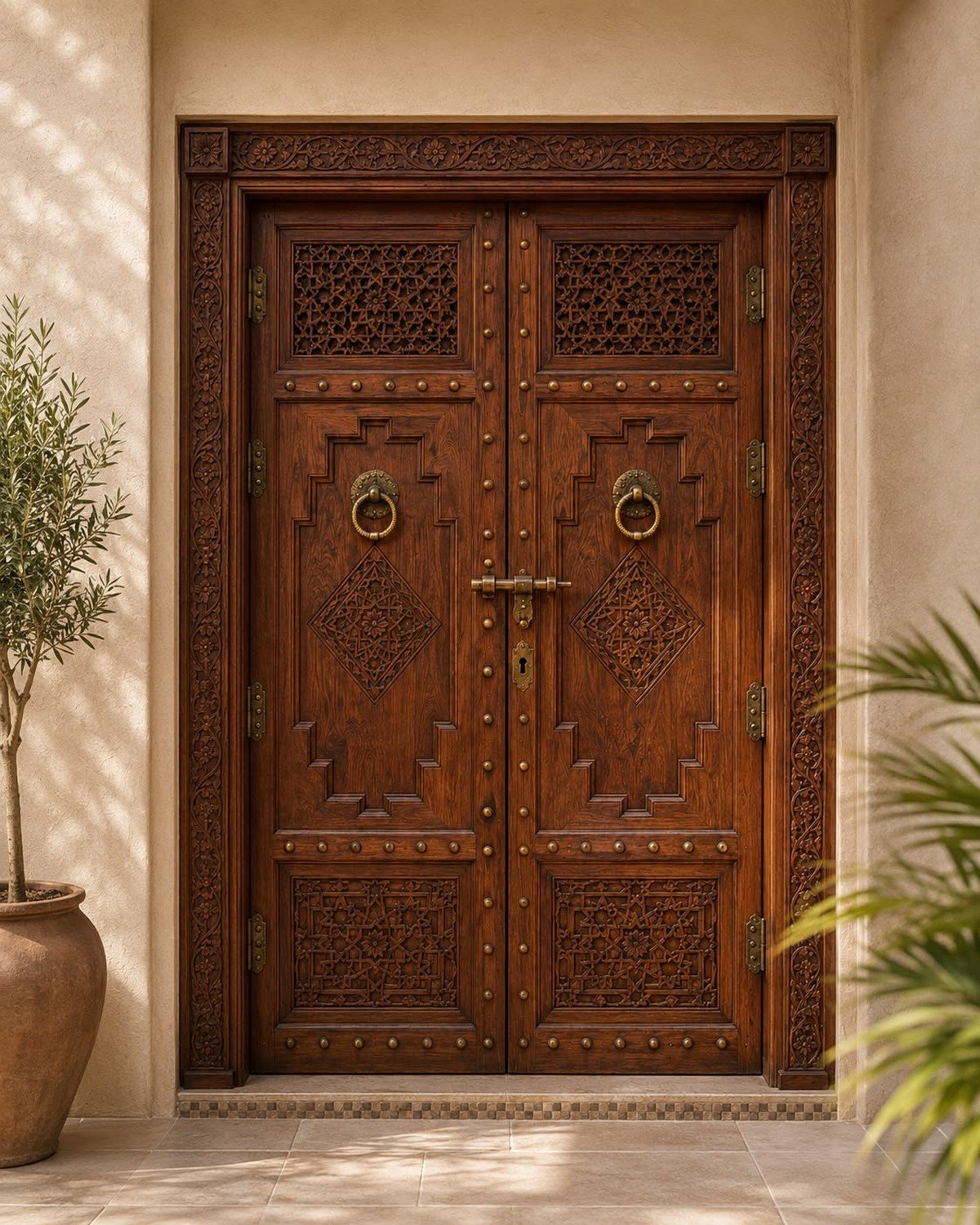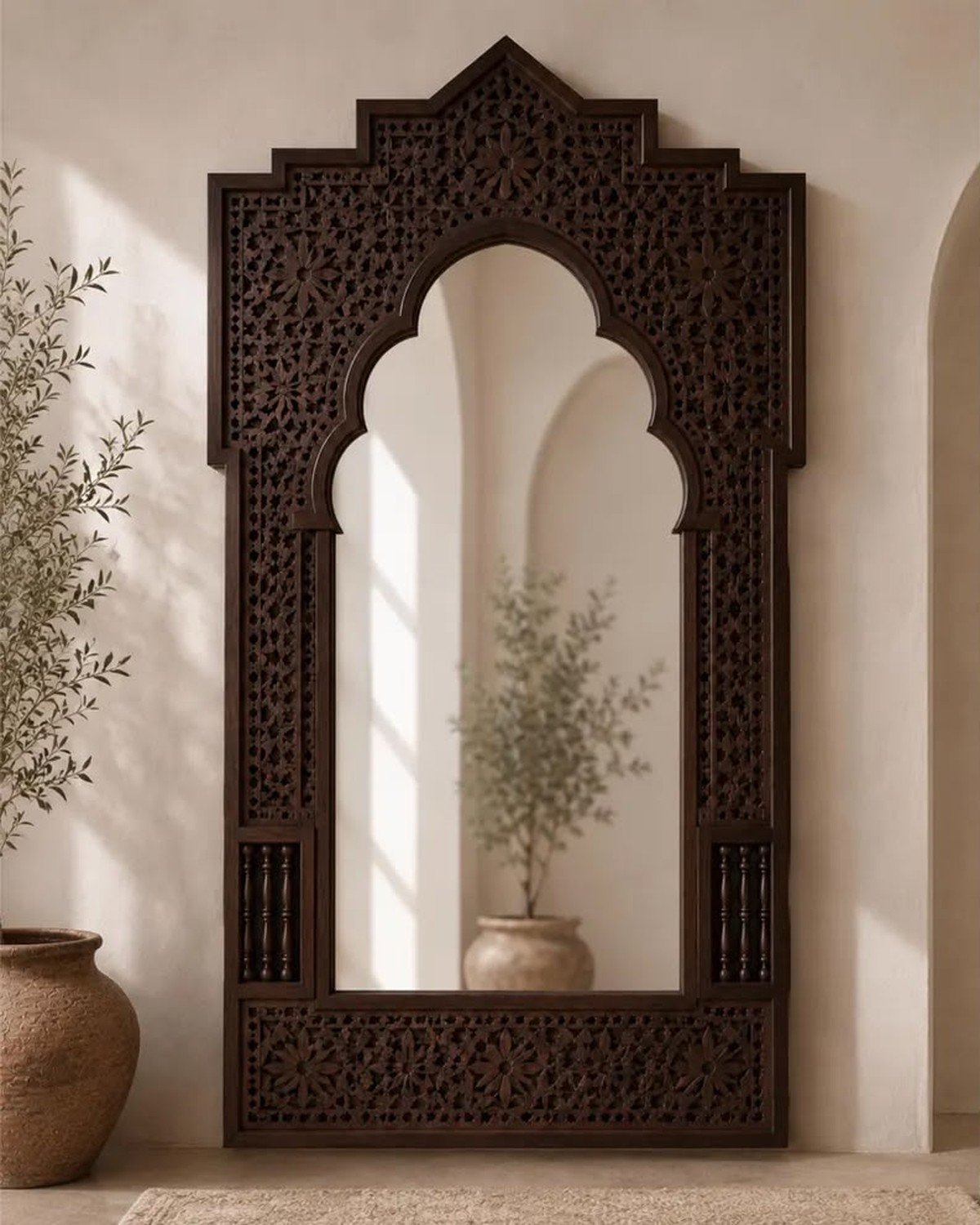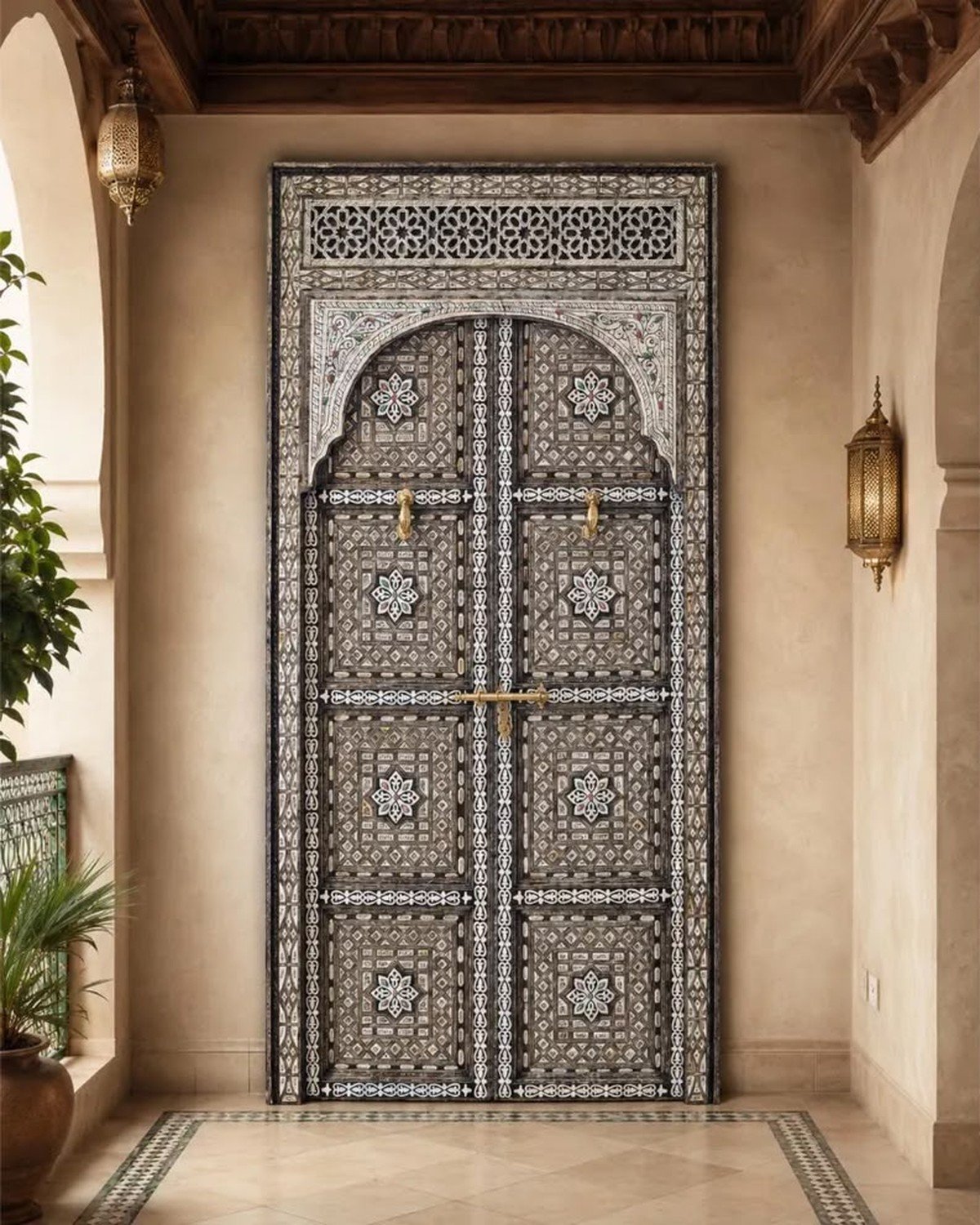
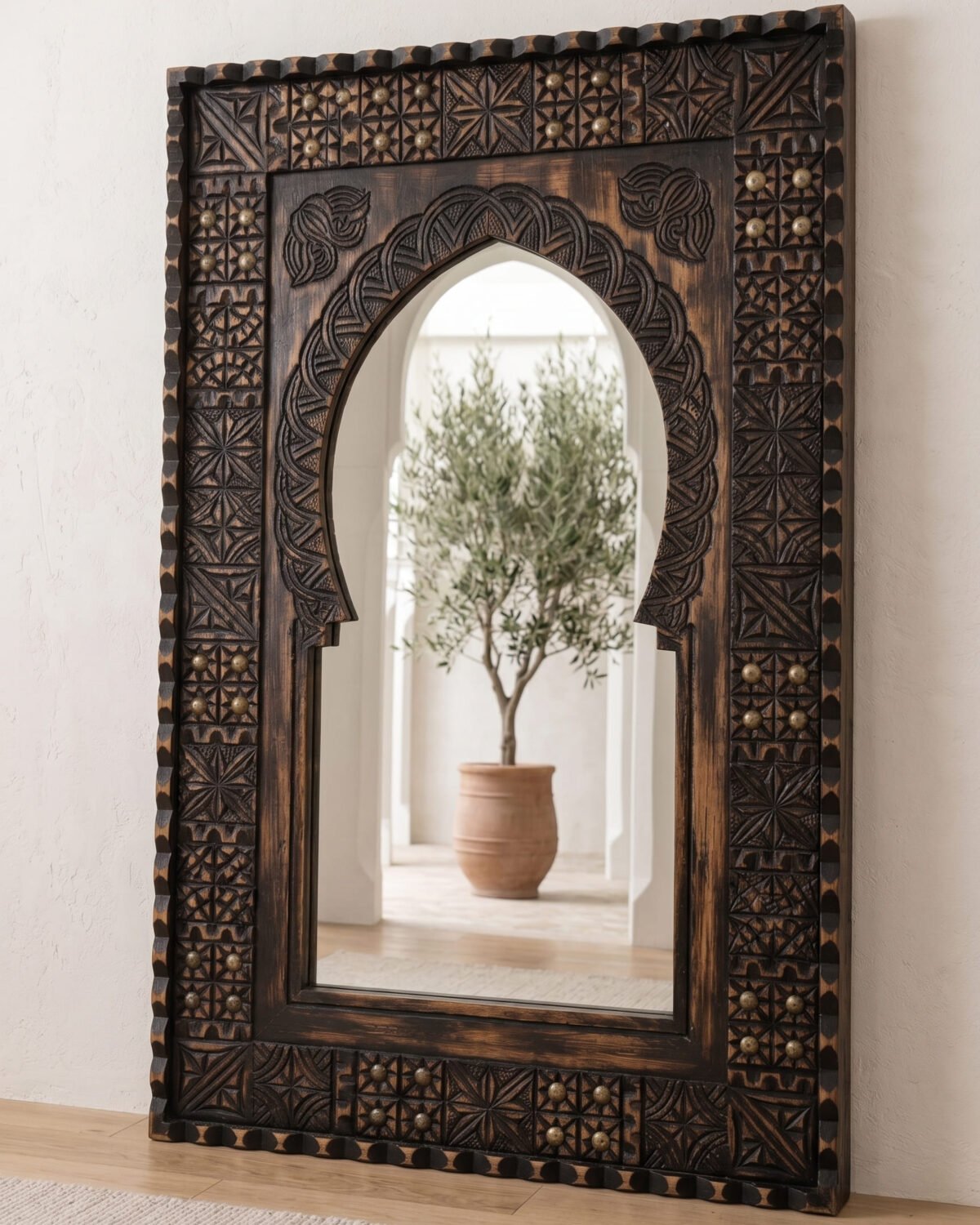
Moroccan mirrors wood are more than simple reflective surfaces; they are windows into a centuries-old tradition of artistic mastery. Originating from the historic medinas of Fes and Marrakech, these pieces represent the pinnacle of North African craftsmanship. When you bring such a piece into your home, you are caring for a legacy of geometry, metalwork, and wood carving.
Authentic Moroccan mirrors often feature hand-chiseled brass frames or intricate cedarwood borders, reflecting the architectural soul of Fes. Understanding the materials behind these crafts is the first step toward preserving their beauty for generations. Proper maintenance ensures that the oxidative patina of the brass and the deep hues of the cedar remain vibrant.
The Artistry of Fes Traditional Crafts
The city of Fes is renowned as the spiritual and cultural heart of Morocco. It is here that master artisans, or maalems, continue to practice techniques passed down through generations. These crafts are defined by a commitment to manual labor, avoiding modern machinery in favor of hand-held chisels and traditional fire-forging methods.
The Role of Cedarwood and Metal
Cedarwood is favored in Moroccan design for its durability and aromatic properties. Artisans carve these frames with geometric patterns inspired by Islamic mathematical principles. When combined with brass or copper detailing, the resulting piece—like a signature work from ALQASR—becomes a statement of heritage.
Maintaining Your Brass and Wood Frames
The beauty of a brass-framed mirror lies in its ability to age gracefully. Over time, the metal will develop a rich patina that enhances the depth of the hand-carved motifs. To keep your Moroccan mirrors looking their best, avoid harsh chemical cleaners which can strip away this natural charm.
Cleaning Techniques
For brass, a soft, dry microfiber cloth is usually sufficient for regular dusting. If you encounter fingerprints or smudges, use a very slightly damp cloth and dry the surface immediately to prevent water spots. Never submerge the frame in water, as moisture is the enemy of the underlying wood structure.
Cedarwood Preservation
Cedarwood Moroccan mirrors is naturally resilient, but it can dry out in low-humidity environments. Applying a small amount of high-quality, clear wood wax once a year helps nourish the grain and provides a subtle, protective seal. Always test a small, inconspicuous area before applying any product to the wood.
Styling Your Space with Authentic Pieces
Moroccan mirrors wood are exceptionally versatile when integrated into contemporary interiors. They act as anchors in neutral spaces, drawing the eye with their intricate textures and warm, metallic tones. Placing a mirror opposite a window or a light source will maximize the natural light in your room, mirroring the bright atmosphere of a Moroccan riad.
When styling, consider the surrounding furniture. ALQASR artisans often pair these mirrors with hand-carved side tables or deep-seated textiles to create a cohesive look. The key is to let the craftsmanship of the mirror remain the focal point of the wall, allowing the shadow-play of the carving to take center stage.
Frequently Asked Questions
How do I know if my mirror is authentically handmade?
Authentic pieces often exhibit slight irregularities in the carving or metalwork, which are hallmarks of human touch. Unlike mass-produced items, genuine Moroccan mirrors feel substantial and reveal the unique signature of the artisan in every curve and fold.
Can I hang these mirrors in a bathroom?
While Moroccan mirrors pieces are beautiful in bathrooms, the high humidity can affect the cedarwood over time. If placed in a damp environment, ensure the room is well-ventilated and wipe away any condensation from the frame immediately after showering.
Explore Our Handmade Moroccan Doors & Mirrors
Further reading: Tadelakt plaster on Wikipedia.
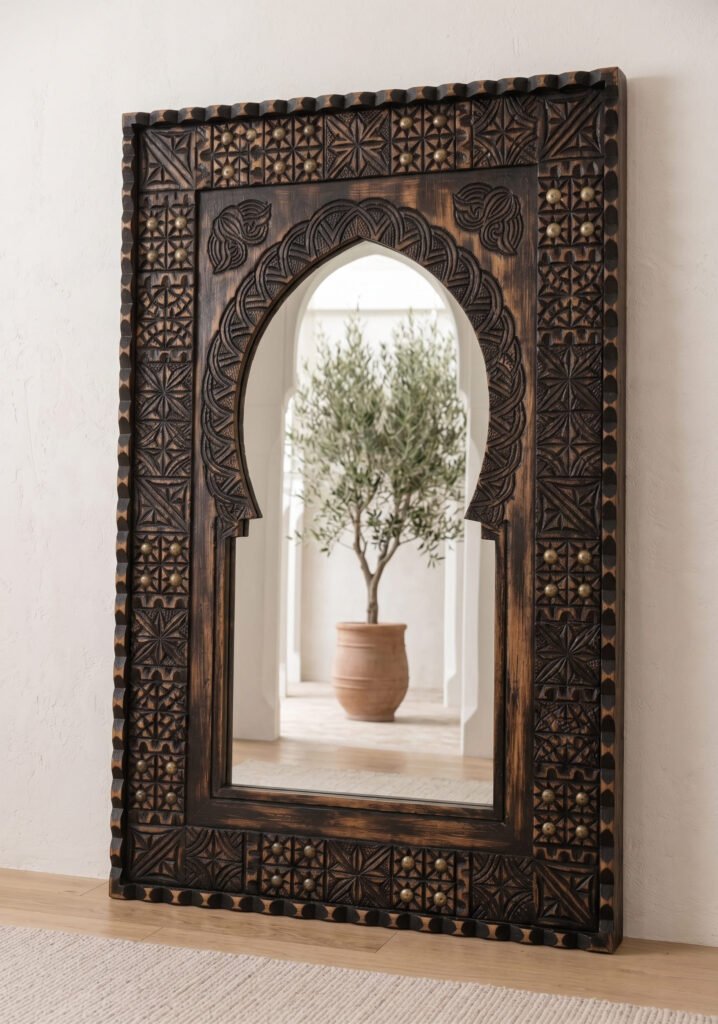
Explore the atelier: discover our Moroccan mirrors, including Fes Lattice and Andalusia Crest.