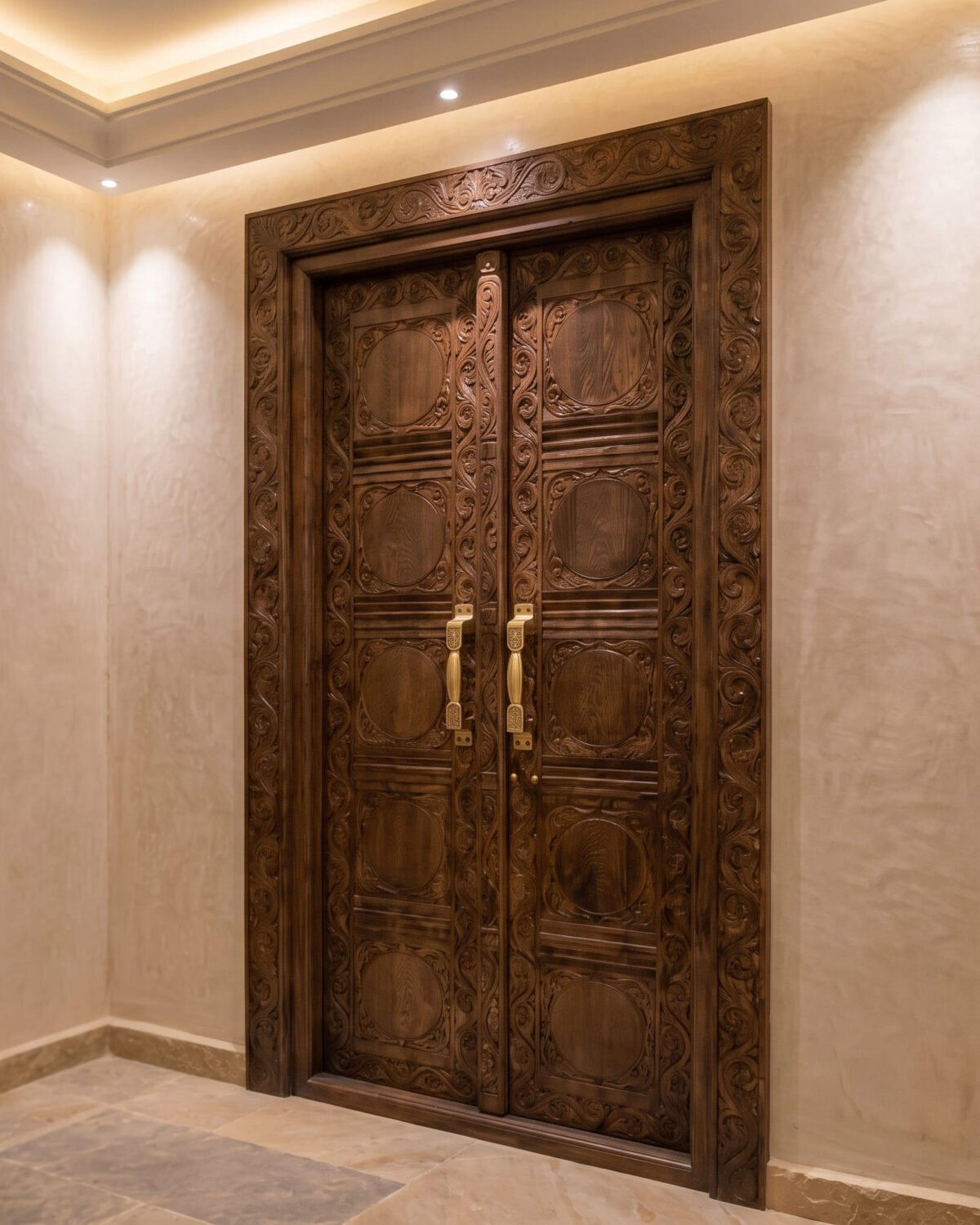
How to style a Moroccan mirror so it feels authentic rather than decorative? The answer starts with understanding the hand-carved cedar, the artisans behind it and the light it is meant to catch. This guide covers the craft, the best placements and the pairings that make a handmade mirror the beautiful heart of a room.
The Timeless Art of Moroccan Woodworking
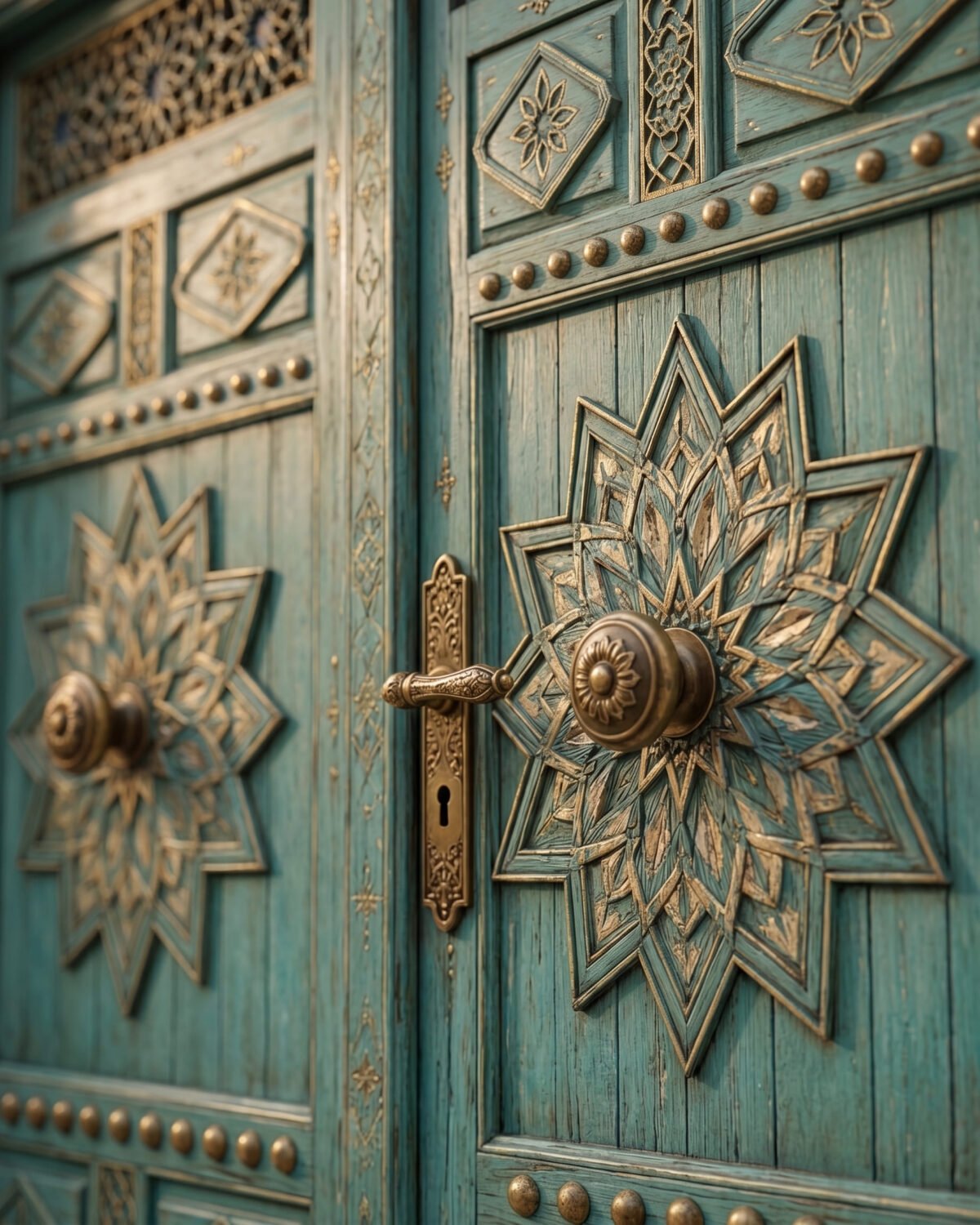
Moroccan woodworking is a centuries-old discipline rooted in the history of the imperial cities, particularly Marrakech and Fes. Masters of this craft, known as maâlems, primarily work with Atlas cedar, a fragrant and dense wood harvested from the mountains. This material is prized for its ability to hold intricate, geometric carvings that defy the complexity of modern machinery.
When you learn how to style a Moroccan mirror, you are essentially curating a piece of this architectural heritage. These mirrors are not mere reflective surfaces; they are frame-works for light and shadow, often integrated with brass inlay or zellige tile accents. Understanding the provenance of these pieces helps in appreciating their weight and presence in a room.
How to Style a Moroccan Mirror in Modern Spaces
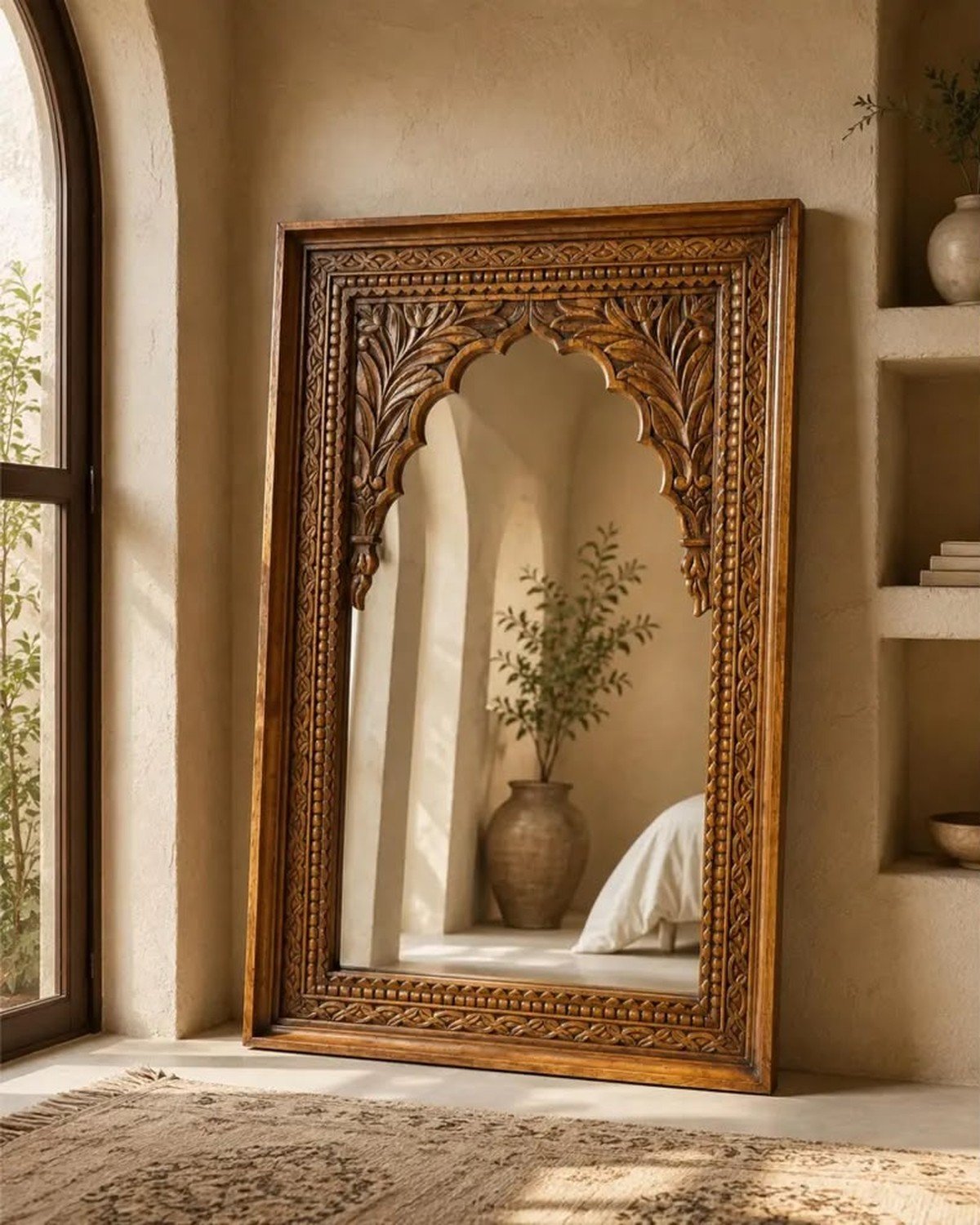
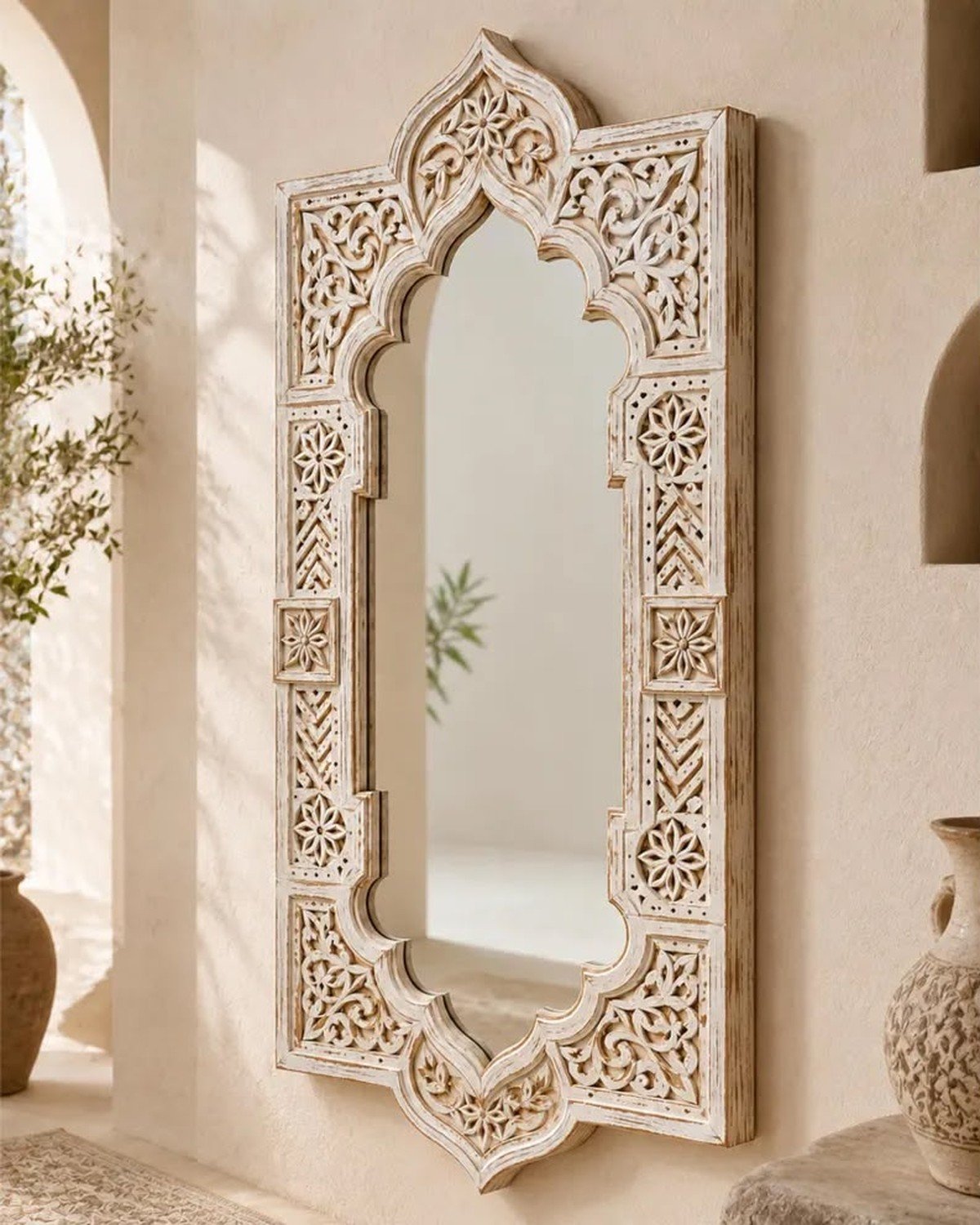
The primary rule when considering how to style a Moroccan mirror is to allow it to act as a focal point. Because of the level of detail in the cedar carvings, the mirror works best against a neutral background. A plain, off-white or lime-washed wall allows the natural grain of the wood and the precision of the chiseling to command attention.
Balancing Scale and Proportion
In smaller hallways, a vertically oriented, slender mirror can create the illusion of height. In dining rooms, pairing a wider, brass-accented mirror with a low-slung console creates a balanced, grounded aesthetic. ALQASR artisans often recommend hanging these pieces at eye level to ensure the reflection interacts harmoniously with the rest of the furniture.
Complementing Textures
To master how to style a Moroccan mirror, you must think about tactile contrasts. Consider placing the mirror near organic materials like linen curtains, wool rugs, or unglazed terracotta pots. The warmth of the cedarwood complements these natural fibers, bridging the gap between historical craftsmanship and contemporary interior design.
Techniques and Materials of the Marrakech Atelier
The beauty of a Moroccan mirror lies in the labor-intensive techniques used by the maâlems. The carving process, known as naqsh, involves using specialized chisels to create patterns inspired by Islamic geometry. These star and polygon motifs represent the infinite nature of the universe and are a hallmark of authentic Moroccan design.
The Role of Brass and Zellige
Many traditional mirrors incorporate brass detailing, which is hand-hammered to catch and diffuse light. Zellige, the mosaic tilework made from natural clay, is sometimes added to the corners or the base of the mirror frame. These metallic and ceramic elements provide a sharp contrast to the matte finish of the cedarwood, making the piece feel dynamic as the sun moves across the room.
Maintenance and Care
Because cedar is a living material, it requires minimal but specific care to maintain its luster. Avoid placing these mirrors in direct, harsh sunlight for extended periods to prevent the wood from drying out. A light dusting with a soft, dry cloth is usually sufficient; steer clear of liquid furniture polishes that might clog the intricate carvings.
Preserving the Craft
Authentic Moroccan doors and mirrors are investments in cultural preservation. By choosing items crafted in Marrakech workshops, you are supporting a lineage of artisans who pass their skills down through generations. Keeping this craft alive is essential to maintaining the unique aesthetic identity of Moroccan architecture in the global market.
Frequently Asked Questions
Should I place my Moroccan mirror in a humid bathroom?
While cedar is naturally resistant to decay, it is best to avoid high-humidity areas like bathrooms. The moisture can cause the wood to expand or warp over time, potentially loosening the intricate brass or tile inlays.
How do I mount a heavy, hand-carved cedar mirror?
Given the weight of solid cedarwood, you should always use professional-grade wall anchors or a French cleat system. Ensure that the mounting hardware is rated for the specific weight of your piece to protect both your mirror and your wall surface.
Explore Our Handmade Moroccan Doors & Mirrors
Further reading: Tadelakt plaster on Wikipedia.